
Clinic where King died is shut down
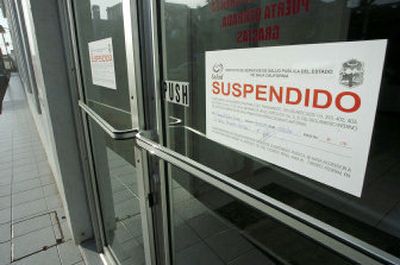
ROSARITO, Mexico – Officials said Friday they have shut down the health clinic in this seaside border town south of Tijuana where Coretta Scott King died earlier this week because it was operating without proper licenses and in violation of health regulations.
Kurt W. Donsbach, the director of the clinic, the Hospital Santa Monica, has a criminal record and has been known for more than a generation in Southern California and Mexico for offering alternative treatments – many of them considered suspect by medical authorities – to terminally ill patients, according to court records and health experts who monitor fraudulent health practices.
At this point, no evidence suggests that Donsbach’s treatments hastened the death of King, the widow of civil rights leader Rev. Martin Luther King Jr. Accompanied by her daughter and a nurse, King, 78 and partially paralyzed by a stroke last year, had arrived at the facility Jan. 26 suffering from ovarian cancer, clinic officials said. She died Monday.
The closure, however, highlights the continued popularity of clinics operating on the Mexican side of the border which provide various forms of alternative treatments, primarily to American patients. Medical authorities and U.S. government officials consider many of the treatments worthless, and in some cases dangerous, but have little ability to close the clinics.
Francisco Vera Gonzalez, health secretary for the state of Baja California, said Mexican officials became aware of the allegations surrounding Donsbach after King’s death and sent inspectors Thursday.
Although the facility appeared to operate as “a hotel and spa,” the inspectors found “installations for providing hospital care and conducting surgical procedures,” Baja California state health officials said in a statement.
According to the Hospital Santa Monica Web site, Donsbach opened the facility in 1983, to offer “a very eclectic approach to chronic degenerative diseases.”
Donsbach, 72, is a chiropractor and is not licensed to practice medicine in Mexico or in California. He practiced in Southern California in the 1970s and 1980s and faced a variety of charges. In 1971, he pleaded guilty to a misdemeanor charge of practicing medicine without a license.
In 1996, he was indicted by federal officials on charges of illegally bringing $250,000 worth of unapproved drugs into the United States and of not paying income taxes. After a plea agreement, he paid back taxes in the case but avoided jail time.
Interviewed by telephone from his home in the San Diego suburb of Bonita, Donsbach blamed the closure of his clinic on the U.S. medical establishment and the federal Food and Drug Administration, which he said had been pursuing him for years.
“We’ve been open for 24 years doing this,” he said, adding that Mexican officials “checked us out in June and gave us a clean bill of health.”
Mexican officials said the clinic will remained closed for at least 30 days. The clinic could be allowed to reopen if hospital officials can demonstrate they were operating under the terms of their license.