
Kwan’s practice raises doubts
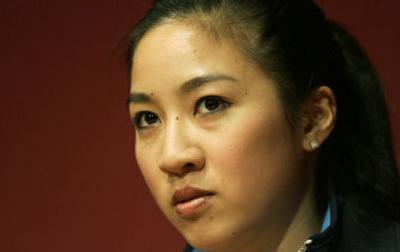
TURIN, Italy – In recent weeks, the biggest question surrounding the Olympic figure skating competition has been whether Michelle Kwan would be healthy enough to contend for the gold medal that has long eluded her. By early Saturday afternoon, after Kwan cut short her first practice here, then acknowledged being “alarmed” with her nagging groin problem, the question became: Will she skate at all?
Kwan, 25, a five-time world champion who received an injury bye onto the U.S. Olympic team after a late January tryout in front of U.S. Figure Skating Association officials, said stiffness and soreness before Saturday morning’s training session led to the sparse, mistake-marred workout 10 days before the start of the women’s competition.
Though she did not address directly whether she was considering withdrawing from the Games, she did not rule it out.
“I really have to pay attention to how I’m feeling these days,” said Kwan, a silver medalist at the ‘98 Olympics in Nagano and a bronze medalist in ‘02 in Salt Lake. “It is important to be in touch with it now. … Dropping out is not something I want to do. I have to listen to what my feelings are.”
Emily Hughes, who finished third in January at the U.S. championships in St. Louis behind Sasha Cohen and Kimmie Meissner, is the team’s alternate. She is training at home in Great Neck, N.Y. Should Kwan drop out before the Feb. 18 women’s draw, Hughes could take her place. If Kwan were to drop out after that, the U.S. team would not be able to replace her.
“Physically, if I’m not able to skate, I would give up my spot,” Kwan said.
After beaming as she walked into an auditorium crammed with dozens of reporters, photographers and 14 television cameras, Kwan grew increasingly pensive and sober as she was barraged by questions about her health. During her morning workout, Kwan had landed one triple toe jump but failed repeatedly to land a clean triple flip, falling once, landing on two feet on another attempt and turning another into a double, according to observers.
After doing some footwork and spins, she left the 40-minute practice about 15 minutes before its conclusion.
“It is kind of frustrating, making mistakes in your first practice,” Kwan said. “It’s been a struggle for me this year. I’ve been through a lot of injuries and I’m just really happy to be here. I’m taking one thing at a time. Listening to my body is important.”
At Kwan’s last major competition, the 2005 world championships in Moscow in March, she finished fourth. A hip injury forced her to miss the entire fall Grand Prix season. In mid-December, she strained her groin, an injury that kept her off the ice for nearly a month and caused her to seek an injury petition onto the Olympic team rather than competing at the U.S. championships.
Her addition to the team was controversial, given her lack of competitive events this season and the fact she effectively bumped Hughes – the younger sister of 2002 Olympic champion Sarah Hughes – out of the Olympics. But the USFSA evaluation team that watched Kwan run through her short and long programs Jan. 27 declared her strong enough to contend for gold here.
Kwan speculated that attending Friday night’s Opening Ceremonies, which meant being outside for four hours in low-30s temperatures, might have contributed to her discomfort. She said she used heat packs last night and would receive treatment on her groin later Saturday before returning to the ice for another practice session today.
She acknowledged being concerned.
“Is it (the injury) coming back? What’s going on?” she said. “I have a lot to do. I want to push through the Olympics, but I really have to take my time.”
She said she had been feeling good at her home rink in Lake Arrowhead, Calif., before coming here. She said she considered resting Saturday morning, but hadn’t trained in two days and wanted to get comfortable on the Turin ice. Though she’s staying in the Olympic Village, she said she might move into other housing as the competition approaches.
“Right now, mentally, it’s a challenge,” she said. “It’s being able to perform psychologically and physically. Physically, I wish I could practice more. … I’m still limited.”