
Rumsfeld, Pentagon differ over propaganda
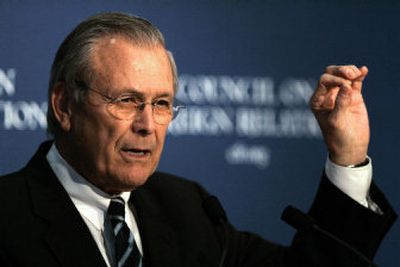

WASHINGTON – U.S. Defense Secretary Donald H. Rumsfeld on Friday criticized a secret U.S. military program that pays Iraqi newspapers to plant stories favorable to the American mission, yet mistakenly said that the Pentagon shut down the program after its existence was revealed.
In his most specific comments yet about the information operations program – carried out by U.S. troops in Baghdad and a private contractor called Lincoln Group – Rumsfeld said that the U.S. military should not be paying Iraqi newspapers to publish news stories. He said that while he initially was not aware of the existence of the program, he ordered it shut down after news outlets published specifics about the operation.
“When we heard about it, we said, ‘Gee that’s not what we ought to be doing,’ ” Rumsfeld said during a taped interview of PBS’ “Charlie Rose Show” on Friday. Rumsfeld said commanders in Iraq and Lincoln Group were notified about the Pentagon’s concern and ceased the propaganda effort.
“They stopped doing that,” Rumsfeld said.
Rumsfeld’s remarks were made available by PBS producers before the show aired late Friday night.
Yet his remarks were at odds with earlier statements made by Army Gen. George W. Casey, the top U.S. commander in Iraq. During a Dec. 16 news conference – more than two weeks after the existence of the Lincoln Group operation was revealed – Casey defended the program and said it had not been shut down.
“We did a preliminary assessment shortly after the (news stories) came out, and we concluded that we were operating within our authorities and the appropriate legal procedures. And so we have not suspended any of the processes up to now,” Casey said.
According to one person familiar with Lincoln Group’s operations, who spoke on condition of anonymity because of an ongoing investigation, the information operations program in Iraq was still active as of a week ago.
A Pentagon spokesman did not return a call seeking comment.
But Rumsfeld’s comments reflect a difference in attitude toward the program between officials in Washington and those in Baghdad. Shortly after the existence of the program was revealed, White House and Pentagon officials expressed concern, while commanders in Baghdad defended it.
Despite voicing concern over Lincoln Group’s activities, Rumsfeld used a separate public appearance Friday to blast the U.S. news media’s negative portrayal of the program, and said that such criticism has a “chilling effect” that discourages U.S. troops from finding creative ways to win hearts and minds abroad.
“The conclusion is drawn that there is no toleration for innovation,” Rumsfeld said in an address before the Council on Foreign Relations in New York.
Since early last year, the secret information operations program has planted hundreds of stories in Iraq newspapers trumpeting the successes of U.S. military offensives, efforts to rebuild Iraq, and the training of the nascent Iraqi security forces.