
Monty Python at its best
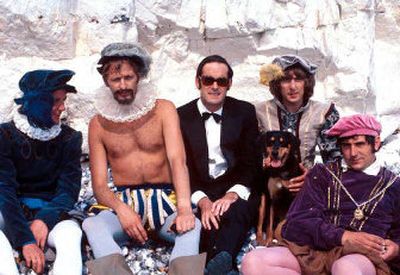
Three decades ago, a corporate miscue changed comedic history.
It put episodes of “Monty Python’s Flying Circus” into the eccentric hands of the guys who created it. Now all of those episodes are reaching PBS.
For the next three Wednesdays, the public television network will air “Monty Python’s Personal Best,” offering brief bits of new humor plus lots of sketches from the old British show “Monty Python’s Flying Circus.”
Then, in April, PBS stations can again air all of the “Flying Circus” episodes.
This is a show that preceded “Saturday Night Live” and the rest, bringing a comedy style that was young, odd and stridently silly.
“I think the special thing about Python is that it’s a writers’ commune,” says Eric Idle, one of the members of the Monty Python ensemble. “The writers are in charge. The writers decide what the material is.”
And they own it, too.
The Python guys had originally been hired hands for the BBC. Five of them worked on “Do Not Adjust Your Set,” a late-afternoon show.
“We were kind of cool,” Idle recalls. “We did it for kids, so we were not allowed to be rude. But it was very zany.”
In 1969, the BBC linked them with John Cleese, already a star, to do a prime-time sketch show. Expectations were low, Idle says, and interference was nonexistent.
“This was our first chance to get a proper, grown-up TV show,” he says. “The BBC just said, ‘Well, here’s 13 (episodes) and come back in September. Just don’t bother us.’ “
They soon split into writing teams: Cleese with Graham Chapman, Michael Palin with Terry Jones, and Idle and Terry Gilliam working separately. They all argued and laughed loudly.
They emerged with sketches that would become comedy classics, filled with perverse goofiness. BBC would have owned them forever – if not for an American deal it made.
ABC “took the last season (and) put them all together and they cut out all the rude bits and they made it a special for 90 minutes,” Idle says.
The Python guys sued. It was too late to stop ABC from airing its version in the fall of 1973. The courts later ruled that ABC and BBC had erred.
“There was talk of a money settlement … for $2 million,” Idle says. “We had a great lawyer (who) said, ‘No, just ask for the masters.’ “
They got them, meaning that the Pythons now owned the episodes. They soon found they had something popular worldwide.
The American success started with a single public TV station in Dallas airing “Circus” reruns in 1974. They then spread throughout the PBS network.
“It’s really wonderful that a silly show like ours was on PBS and people could find it,” says Idle.
The Python movies, beginning with “Monty Python and the Holy Grail,” arrived between 1975 and 1983. Then the group seemed to break up – except that forces kept bringing back their humor.
Idle co-wrote the Broadway hit “Spamalot,” which won the Tony for best musical. He also suggested this new idea for PBS specials, turning it over to veteran producer John Goldstone.
“I spent about two years trying to find all of them so we could put this show together,” Goldstone says.
Graham Chapman died of cancer in 1989. The others agreed to each assemble an hour of their favorite sketches then to combine on one for Chapman.
The result will sprawl across six hours on three Wednesdays: the Idle and Chapman hours on Wednesday, Cleese and Gilliam on March 1 and Palin and Jones on March 8.
Fans will again see old favorites ranging from the “Silly Olympics” to “Fish Latin” to Idle’s “Lumberjack Song.”
Idle says the Pythons have no further plans to reunite or collaborate on new material.
“We’re all over 60,” he says. “I’m sorry to say this, but comedy is really a young man’s game. It’s sort of about what you had to say when you were fresh and young.
“I’m perfectly happy to get drunk with the rest of them … but I think it should go no further. We’ve earned that, I think.”