
Sectarian violence floods Iraq
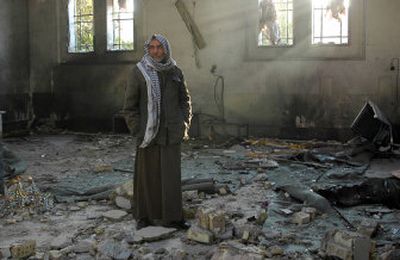

BAGHDAD, Iraq – More than 100 people were reported dead Thursday as the fierce sectarian passions unleashed by the bombing of one of Shiite Islam’s holiest shrines raged unchecked, pushing Iraq closer to the brink of what many fear could turn into a full-fledged civil war.
Deepening the sense of crisis, Sunni leaders announced they are suspending their participation in talks with Shiite and Kurdish parties for a new government, saying it is “not acceptable to negotiate with people who are harming us.”
In a bid to restore order and avert more violence, the government imposed a nationwide curfew from 8 p.m. Thursday until 4 p.m. today, a dramatic step that will prevent all Iraqis from attending the traditional Friday noontime prayers.
Despite the curfew, gunmen stormed a house south of Baghdad early today and fatally shot five Shiite men, an Iraqi army officer said. The attack occurred about 4 a.m. in the town Latifiyah, 20 miles south of Baghdad.
Shops, offices and businesses were closed in observance of a three-day period of national mourning for the destruction of the gold dome of the 9th-century shrine, which contains the remains of two of Shiite Islam’s most revered imams.
All leave was canceled for the Iraqi security forces, who were deployed in strength across the country. U.S. forces, who are increasingly ceding the streets to the incomplete Iraqi army and police force, kept a low profile. U.S. forces are still deployed, military spokesman Maj. Gen. Rick Lynch told reporters, but Iraqi forces “are in the lead.”
Seven American soldiers were reported killed in two separate roadside bombings in the northern town of Hawija and in Balad, just north of Baghdad, but Iraq’s attention has shifted from the anti-American insurgency to the brewing conflict between Iraqis.
Shiites staged more demonstrations in Baghdad and Shiite cities across the south, but the mood was calmer than Wednesday, when the rage ignited by the bombing of the shrine showed how quickly Iraq could disintegrate into chaos.
In the worst single incident, the bodies of 47 men were found bound and shot in the head in a ditch near a factory in Diyala province. In a reflection of the reigning confusion, it was unclear who the men were. An Interior Ministry official said all the men were Shiites; an official with the Islamic Party said they were Sunnis.
Among the dead found Thursday were the bodies of Sunnis, including several prominent imams, who were abducted during the wave of attacks Wednesday against Sunni mosques in retaliation for the bombing of the Askariya mosque in Samarra. A bomb blast in the town of Baqouba killed 16 people.
Also killed were a correspondent and two employees of the Al-Arabiya TV network, whose bullet-riddled bodies were found in Samarra on Thursday.
The correspondent, Atwar Bahjat, 30, was a familiar face across Iraq; she had once worked for Iraqi state television, then for Al-Jazeera, and most recently she had reported for Al-Arabiya.