
Agony of defeat
Driving from Cheney to Sports USA — a court complex off Barker Road —was no quick trip. But to Harlan Shellabarger’s sixth-grade AAU basketball team, the 40-minute freeway commute beat a mad dash and frantic scramble. That’s what the team is up against now after becoming one of dozens of groups displaced when Sports USA closed in December due to financial problems. January games were rerouted to middle school gyms and into a crowded lineup at The Warehouse, in Spokane.
“I think it’s a great facility and I think that we need it in the area,” said Shellabarger, the team’s coach, of the loss of Sports USA. “I wish I could hit the lottery and help them out.”
Few would argue the value of sports courts, baseball diamonds and ice rinks in battling obesity and keeping kids out of trouble.
The same facilities that serve recreational needs also come in handy from an economic development standpoint. Top-notch facilities help attract tournaments and with them, out-of-town players, parents and coaches who spend money locally.
But while sports complexes are in peak demand, they’re closing more rapidly than a fastball thrown at a reluctant hitter.
In the past five years, more than a half-dozen sports facilities in Spokane and North Idaho shut down or are in the process of closing.
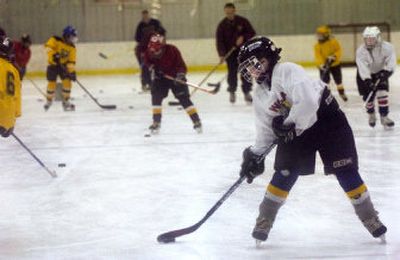
Casualties include a multi-diamond softball complex in Liberty Lake, a South Hill indoor soccer center, ice rinks in Liberty Lake and Spokane Valley, a golf dome and Sports USA.
Additionally, Quad Park, a Post Falls softball complex, was sold to developers and Joe Albi Stadium, a historic hub for high school football that’s owned by the city of Spokane, is on the bubble.
The culprit in the majority of these closures is debt, said Eric Sawyer, executive director of Spokane Regional Sports Commission, a nonprofit economic and community development group.
Sawyer has studied the dilemma and thinks that without hefty mortgage payments, most sports facilities could be self-sufficient.
“I don’t care how hard you try or how many people you bring into these facilities, they just do not generate enormous incremental revenue at the front door to pay the debt load,” Sawyer said.
In the past 10 to 15 years, interest in club sports, which are offered outside of schools, has grown by 700 percent, while facility development has increased by less than 1 percent, Sawyer said.
Groups like the YMCA, USA Volleyball Evergreen Region, Amateur Athletic Union, Spokane Youth Sports Association, Inland Empire Hockey Association, churches and Skyhawks compete for limited gym space. A shortage of facilities to serve these groups can curtail programs, limit players and lead to play times that are too early or late for kids.
A study commissioned by the City of Spokane Parks Foundation in 1997 looked specifically at the facility crunch. The study recommended adding 16 basketball courts that would convert to 32 volleyball courts to serve over 913 teams at that time.
Sawyer said providing youth sports venues is a public challenge, but its one he thinks voters can tackle. Once taxpayers understand the role these complexes play in strengthening communities economically and bettering young lives, they may open their wallets, he said.
If taxpayers build facilities and businesses sponsor them, Sawyer said, parks and recreation departments or nonprofits can run the complexes while users’ fees pay their monthly bills.
Ideally, complexes would be strategically placed throughout cities within Spokane County, giving kids easy after-school access and increasing their marketability, Sawyer said.
Liberty Lake has expressed interest in getting involved with Sports USA, Sawyer said. The complex not only serves youth and adult sporting interests, but it’s also a host site for Pacific Northwest Volleyball Qualifier, a volleyball tournament that draws 200 junior girls’ teams that fill hotels, including two in Liberty Lake.
Although the facility is currently in Spokane County, it lies within a 644-acre area that Liberty Lake plans to annex. The Spokane Regional Sports Commission and Spokane Public Facilities District are looking at ways to help reopen it, Sawyer said.
“We’re kind of in a wait-and-see (mode) until we get past this bankruptcy,” he said.
Carlson and Associates LLC, the partnership that owns Sports USA’s interior assets, such as the removable maple flooring and divider curtains and nets, has filed for bankruptcy protection. The building, owned by Tim Welsh of Garco Construction, is not involved in the filing and is listed as a creditor.
Kert Carlson, founder of Sports USA, said the building and land cost about $3.7 million. Additionally, 22 investors kicked in $1.2 million in tenant improvements.
Carlson said the facility struggled to generate enough money to pay both a $20,000-a-month mortgage and monthly expenses that ranged from $25,000 to $40,000.
In the end, the facility, which typically served over 1,000 kids on a busy Saturday, was short about $15,000 to $25,000 a month.
“Realistically, in order for Sports USA to survive, we had to do about $55,000 to $60,000 per month,” Carlson said.
Sports USA was the fourth complex in a several-mile radius to go under in a few short years. Ice World USA, a Liberty Lake ice arena, and Sports World, a four-diamond softball complex, are also among the fallen.
Carlson said the facilities all lacked assistance from a government entity. “The bottom line is none of us ever received support to help us market our facilities,” he said.
Planet Ice opened within a few months of Ice World USA, a rink owned by a group that included former professional quarterback Mark Rypien. Ice World USA cost about $3 million to build and equip and Planet Ice cost about $4.5 million. Investors in both rinks criticized United Security Bank, which later became AmericanWest Bank, for simultaneously approving both loans. However, the bank kept Planet Ice open for several years after foreclosing, while trying to find a rink operator to buy the facility.
Ice World is now a commercial building, while Planet Ice is having its last season after being sold to a manufacturing company in the absence of a buyer willing to operate it as a rink.
Kris Ryan of Planet Ice said ice-user groups are forming a nonprofit to raise some $3 million to build a debt-free, double-sheet rink somewhere in the greater Spokane Valley.
Without debt, Ryan believes the rink could make it. Monthly utilities run between $10,000 to $12,000, with payroll and taxes costing another $20,000 a month. Although summers are slow, the hockey season brings large crowds, regional tournaments and up to $120,000 a month, she said.
A similar effort was launched across the state line in Coeur d’Alene, where ice users formed a nonprofit to purchase a rink that was once part of Go-Kart Family Fun Center. Kootenai Youth Recreation Organization raised $1 million to purchase the rink, enclose it and make improvements. Businesses and groups donated money, materials and labor and Pepsi donated an electronic scoreboard. After a two-year hiatus, the rink recently reopened.
Coeur d’Alene is also a contender for a $30 million community center that could include sports facilities. McDonald’s heiress Joan Kroc willed her $1.5 billion estate to the Salvation Army to build community centers nationwide and Coeur d’Alene is one of eight cities in the running for one of the centers.
Spokane Soccer Center opened in Spokane Valley in 1998 and is one of the few privately-owned successes. It cost about $1 million to build and has $15,000 in monthly operating costs, not including payroll and taxes, said Brian Dreves, who manages three centers owned by an investment group. The others are near Boise, Idaho and Portland, Ore.
“In Spokane, we actually have a really, really good adult following. That’s part of our success,” Dreves said.
Unlike Spokane Youth Sports Association’s indoor center, a South Hill facility that closed after losing money 13 of 14 years it operated, Spokane Soccer Center is centrally located.
The location, off the Argonne exit on east Nora, draws over 200 youth and adult teams from Post Falls, Coeur d’Alene and Spokane County, Dreves said, adding, “We’re basically 15 to 20 minutes from anywhere in Spokane.”
A pro shop there sells team apparel, shoes and equipment, further bolstering revenue.
Former NBA point guard John Stockton owned a storage complex on North Hamilton that he and a group of investors spent about $1 million renovating into The Warehouse.
The complex, with five convertible basketball-volleyball courts, indoor batting cages and an exercise room, opened in 2002.
Kerry Pickett, director of the facility, said the location gives easy access to high school baseball teams, who use the indoor training facility in the winter. It also enables the complex to trade gym space with Gonzaga University.
“Our location is pretty good. I think the old maxim about location, location is applicable,” Pickett said, adding that except for summers the facility is at or near capacity most of the time.
Part of the reason court complexes struggle locally, Pickett said, is that schools rent out cheap gym space, creating competition that limits pricing ability.
He credits Stockton, a Spokane native, for being willing to make less money in order to enhance the community.
“Technically we’re a for-profit business, (but) we’re not tearing the cover off the ball,” he said. Still, when it comes to building sports venues, the venture may be better suited for tax write-offs than dividend checks.
“If we can stay open, serve the community and not lose money that would be the bottom-line goal,” Pickett said, adding, “That’s not necessarily an attractive investment.”