
Inspired by memories
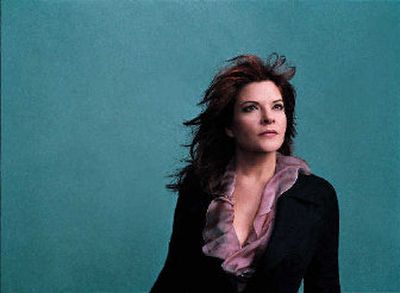
At sunrise, on the morning after Johnny Cash’s funeral, his daughter Rosanne was at his graveside, sipping coffee.
“I had a Starbucks at the grave,” she said during a recent interview from her New York home. “Because in the last year of my dad’s life, whenever I saw him, I got up at 4 and had coffee with him.”
That sunrise in the cemetery is one of many vivid images found in “God Is in the Roses,” one of the best songs on the younger Cash’s elegant new album, “Black Cadillac.”
The CD, which will be released Tuesday, details the sense of sorrow and loss she experienced not only with the death of her legendary father, but also in losing her stepmother, June Carter Cash, and her mother, Vivian Liberto Cash Distin, all within about two years. Her mother’s death occurred on Rosanne’s 50th birthday.
“This record is not a diary,” Cash said. “It’s not a journal and it’s not a confessional. It is something that is very universal.
“I can’t tell you how many funerals I went to in the last several years with my friends’ parents leaving, too. It’s something we all go through, and it was a privilege to bring some poetry to that experience.
“I didn’t want to write about the death of famous people,” she added. “I wanted to write about my experience of loss and that could have been anybody. My dad could have been an insurance salesman and the songs would have been similar.”
But as she knows, and the world knows, Johnny Cash was no insurance salesman. Revered by generations of country and rock artists, the late singer was the subject of the recent biopic “Walk the Line,” which last week won the Golden Globe for best musical or comedy.
Rosanne’s sister Kathy, in particular, was far from pleased with the film – especially with how it portrayed their mother, Vivian, as being less than supportive of her husband’s career.
Rosanne Cash doesn’t share that infuriation, but she acknowledges the movie was very difficult for her and her family to watch.
“Well, there’s just no way that Kathy or me or any of my sisters could be objective about this story,” she said. “I think that we are the four people this movie was not made for. Because nobody really wants to see the Hollywood version of the breakup of their parents’ marriage or my father’s drug addiction. …
“I don’t need it. It’s not entertainment to me. But I wasn’t angry about it. I don’t think they portrayed my mother unfairly. I think my mother appeared like a woman who wanted to hold her home and family together, which she was.”
Cash has crafted an impressive career of her own. Walking the fine line between folk, country and rock, the Grammy Award-winning singer has had 11 No. 1 singles, many of which can be found on the recently released collection “The Very Best of Rosanne Cash.”
But she’s gotten far more introspective in the latter part of her career, on such albums as 2003’s “Rules of Travel,” which included “September When It Comes” – a hauntingly beautiful tale she penned about life, death and unresolved issues of the heart. Her father performed it with her as a duet, the last they recorded together.
“It’s the ultimate family snapshot for me,” Cash said. “I’m very glad I have that.”
The new album, “Black Cadillac,” is highlighted by songs like the simmering title track (which sneaks in a trumpet line from her father’s “Ring of Fire”), the anger-filled “Like Fugitives” and the heart-tugging piano ballad “I Was Watching You,” inspired by memories of her parents telling her what songs they listened to on the radio on their honeymoon.
Past, present and future fell together for her while she was writing the song, which includes the line “Long after life, there is love.”
“I don’t think you get over loss,” Cash said. “I think you learn to find a place for it in your life and in your body and in your thoughts. …
“I don’t believe in closure like some people talk about. I just don’t believe in that. What do you close? You close your love for them? You just renegotiate the terms of the relationship.”