
Distinctive belief

Jehovah’s Witnesses are renowned for teaching that Jesus is not God and that the world as we know it will soon end.
But another belief causes even more controversy – namely, that God forbids blood transfusions even when patients’ lives are at stake.
The doctrine’s importance will be underscored next week as elders who lead more than 98,000 congregations worldwide recite a new five-page blood directive from headquarters.
The Witnesses have opposed transfusions of whole blood since 1945, believing it to be banned by the Bible. A later pronouncement also barred transfusions of blood’s “primary components,” meaning red cells, white cells, platelets and plasma.
An announcement in 2000 in the official Watchtower magazine, however, said that because of ambiguity in the Bible, individuals are free to decide about therapies using the biological compounds that make up those four blood components – such as gamma globulin and clotting factors that counteract hemophilia.
Next week’s directive could create confusion about these compounds, known as blood “fractions.”
Without noting the 2000 change, the new directive tells parents to consider this: “Can any doctor or hospital give complete assurance that blood or blood fractions will not be used in treatment of a minor?”
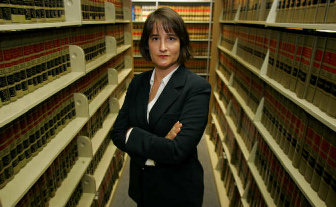
By coincidence, next week’s directive follows some heavy criticism of the blood transfusion policy from Florida attorney Kerry Louderback-Wood, writing in the Journal of Church and State, published by Baylor University.
Louderback-Wood, who was raised a Witness but now has no religious affiliation, accuses her former faith of giving “inaccurate and possibly dishonest arguments” to believers facing crucial medical decisions.
She complains that many Witnesses and physicians aren’t given clear instruction about their faith’s blood transfusion policy, particularly on the subject of fractions.
Louderback-Wood says her mother died from severe anemia in 2004 because local elders didn’t realize hemoglobin is permitted. She learned that it was allowed from the Web site of Associated Jehovah’s Witnesses for Reform on Blood, which was founded in 1997 by dissenting elders, eight of whom served on hospital liaison committees that advise Witnesses and physicians.
The founder of Associated Jehovah’s Witnesses, speaking on condition of anonymity to protect his standing in a faith that does not tolerate dissent, says liaison committee members know about the revised teachings, but most Witnesses automatically refuse all forms of blood without consulting the committees. Physicians are often ill-informed about Witness beliefs, he says.
Louderback-Wood thinks the faith is subject to legal liability for misinforming adherents, which to her knowledge is an untested theory in U.S. courts. There are related issues in a pending lawsuit in Calgary, Alberta, over the death of a teenage leukemia patient.
Jehovah’s Witnesses General Counsel Philip Brumley issued a prepared statement rejecting Louderback-Wood’s “analysis and conclusions,” saying: “Any argument challenging the validity of this religious belief inappropriately trespasses into profoundly theological and doctrinal matters.”
The Watchtower’s 1945 ban said “all worshippers of Jehovah who seek eternal life in his new world” must obey. Such edicts are regarded as divine law, since the Governing Body uniquely directs true believers.
Violators risk ostracism by family and friends.
A subsequent Watchtower pronouncement forbade storage of a patient’s own blood for later transfusion. In all, Associated Jehovah’s Witnesses lists 20 shifts and refinements in blood-related rules over the years.
At the core of their blood beliefs, Witnesses cite Acts 15:29, where Jesus’ apostles agreed that Gentile converts should “keep abstaining from things sacrificed to idols and from blood.” They also point to passages in Genesis and Leviticus.
Judaism and Christianity have always understood these Scriptures to ban blood-eating for nourishment.
This underlies Judaism’s kosher procedures to extract blood from meat, which Witnesses do not follow. Christianity eventually decided the rule was temporary.
Advances in bloodless surgery have reduced medical dangers for Witnesses in the United States, but Associated Jehovah’s Witnesses maintains the blood policy is a life-threatening problem elsewhere.
Louderback-Wood says she’ll be contented if her protest saves one child’s life.