
Comic playwright Wasserstein dies at 55
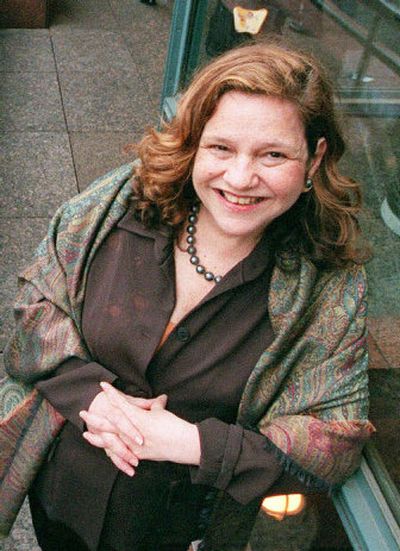

Wendy Wasserstein, who won a Pulitzer Prize, a Tony Award and considerable popularity writing comic yet pointed plays and essays about the nagging choices and disappointments that baby boom women encountered on the path to “having it all,” died Monday. She was 55.
Wasserstein, who had been battling cancer in recent months, died at Memorial Sloan Kettering hospital in New York City, according to Andre Bishop, artistic director of the Lincoln Center Theater.
“Today is unbearable. She was very much like the women she wrote the plays about,” Bishop told the Los Angeles Times. “She connected to people in her plays in a personal way. I think that’s what made her distinctive and I think a lot of people – men and women – felt as if they knew her through her work. There are artists and performers like that – you kind of feel you know them even when you don’t. She was a great, great person.”
Wasserstein secured her place in American theater with four consecutive plays, from “Uncommon Women and Others” (1977) to “The Sisters Rosensweig” (1993) that traced women’s progress from college to middle age in the wake of the feminist revolution of the 1960s. Part of their strength and charm, Wasserstein’s admirers said, was that they weren’t sociological sketches of a generation, but highly personal stories anchored in her own experiences with family and friends.
The third in her informal series, “The Heidi Chronicles,” won the Pulitzer Prize for drama and the Tony Award for best play in 1989 – but it raised some prominent feminist eyebrows, including Betty Friedan’s, for an ending in which a committed feminist art historian, feeling sad, isolated and let down by the movement’s lost promise of enduring comradeship and solidarity, decides to adopt a baby.
“I’m just not happy. I’m afraid I haven’t been happy for some time,” protagonist Heidi Holland says near the end of a long, rambling, extemporaneous speech to her high school alumnae association, supposedly on the achievements and prospects of the women’s movement, of which she is considered a distinguished exemplar. “I don’t blame any of us. We’re all concerned, intelligent, good women. It’s just that I feel stranded. And I thought the whole point was that we wouldn’t feel stranded. I thought the point was that we were all in this together.”
Wasserstein said she wasn’t trying to discredit feminism, which she regarded as a life-changing inspiration, but to write what seemed most truthful for her character. But she wanted to open eyes to the trap of trying to “have it all.”
Besides being an industrious writer, Wasserstein was an avid traveler and socializer and a woman whose need to nurture led her on an eight-year journey through fertility treatments culminating in motherhood at 48. She was known for self-deprecating humor, sharp wit and an enthusiastic, outgoing nature that came across in her numerous lectures and TV talk show appearances, in addition to her plays and her frequent essays for newspapers and magazines, which are collected in the books “Bachelor Girls” and “Shiksa Goddess (Or, How I Spent My Forties).”
Her “combination of sweetness and wit is true, and people embrace her for that,” theater critic Robert Brustein, who got to know Wasserstein as dean of Yale’s drama school, said in a 1997 New Yorker profile of the playwright. “Being with Wendy, you feel like you’re having a bubble bath, or an ice cream soda.”
She was born in Brooklyn to two Polish-Jewish immigrants, Morris and Lola Wasserstein – the father an inventor and manufacturer of gift wrapping and decorative items, the mother a larger-than-life personality who relished daily dance lessons. Going to Saturday matinees on Broadway was a weekly childhood ritual, Wasserstein recalled in a 1997 article for the New York Times in which she detailed a program she created to interest New York children in theater.
Her brother, Bruce Wasserstein, is a well-known Wall Street investment banker; he also owns New York Magazine and other periodicals. The eldest sister, Sandra Meyer, became a high-ranking bank executive before her death from breast cancer in 1997, at 60. Another sister, Georgette Levis, operates a Vermont inn with her psychiatrist husband. She also is survived by her daughter, Lucy Jane Wasserstein, and her mother, Lola Wasserstein, both of New York City.