
Yo-Ho, What’s that smell?
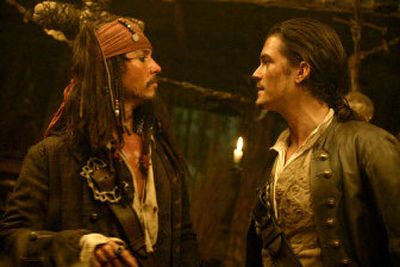
You’ve probably been hearing a lot about pirates lately. There’s that big movie in theaters, you know, and pirate toys are everywhere in stores. But how much do you know about real pirates?
Many myths and fantasies about pirates have developed over the years because of the dangerous and dramatic lives pirates lived. But while they roamed the seas, pirates were feared and hated. They were thieves who attacked ships and stole whatever valuables they could find, often harming or killing the people on board the ship.
It was a risky life, since captured pirates were usually killed; but many seamen thought getting rich quick was worth the risk. Pirates who didn’t die fighting or in captivity often died in storms or in the shipwrecks that now dot the American and Caribbean coastlines.
The pirates whose stories we usually see in books and movies operated in the Atlantic Ocean in the 17th and 18th centuries. In the summer they raided ships in the north, off the coasts of Connecticut and Massachusetts. They moved south for the winter to the warmer waters of the Caribbean.
The golden age of pirates was from 1680 to 1730, when they ruled the seas with almost no one stopping them. Pirates had plenty of vessels to loot, because many ships were going back and forth between Europe and the New World, often carrying precious cargo, including gold and silver. These were mighty riches for a swashbucklin’ captain!
One famous pirate, Edward “Blackbeard” Teach, who got his name from his long black beard, terrorized the waters off North and South Carolina in 1717 and 1718. He escaped to land before being killed and many people have searched – unsuccessfully – for the treasure he supposedly buried. But his sunken ship, Queen Anne’s Revenge, was found off the coast of North Carolina about 10 years ago and is still being studied.
While much is left to the imagination when it comes to the lives of pirates, there’s one thing you can count on: They stank! D.W. Gibson, one of the authors of the upcoming pirate book “Fundorado Island,” has studied pirates his whole life. “It was a grimy life; these were probably very smelly ships,” Gibson says.
And Gibson said the new movie “Pirates of the Caribbean: Dead Man’s Chest” gets that part of pirate life accurate – right down to the rotten teeth.
If you’re going to see the movie, pay attention to how dirty everyone is! But remember that the film is rated PG-13 and in parts it’s pretty scary, so younger kids might prefer playing pirate to seeing them.
Pirate Lingo
“Talk Like a Pirate Day” isn’t until September, but it’s never too early to practice.
Aye: Yes
Booty: Stolen treasure
Bounty: A ship’s freight
Crow’s-nest: The lookout on the top of a ship’s mast
Cutlass: A short, curved sword
Galleon: Type of merchant trading ship often laden with riches and taken by pirates
Jolly Roger: The skull-and-crossbones black flag on a pirate ship
Landlubber: Someone who doesn’t like going to sea
Quartermaster: Second to the captain of a pirate crew, who led attacks to board other vessels
Privateer: Like a pirate, but acting with permission from a government
Rogue: A rascal or scoundrel; someone who does what he shouldn’t
Real Pirate Stories
Black Sam Bellamy (active 1717): Stole the English galley Whydah, full of gold and silver, after chasing it for three days. Bellamy died when the Whydah sank after getting stuck on a sand bar off Cape Cod, Mass. Its remains, and treasure, were found 20 years ago.
Thomas Tew (active 1692-95): He pretended to be a privateer – stealing from ships with the government’s permission – but he was a pirate. He was killed by a cannonball while trying to board a ship from India.
William Kidd (active 1697-1700): A privateer who chased the famous pirate Blackbeard at the order of Massachusetts’ governor. He never captured Blackbeard, so turned to pirating himself.
Rachel Wall (active 1780s): One of few women pirates, she acted with her husband, a fisherman. She would stand at the bow of the ship, pretending to be in distress. When rescuers arrived, her husband and his men would attack.
Source: The New England Pirate Museum