
The magic of falling water
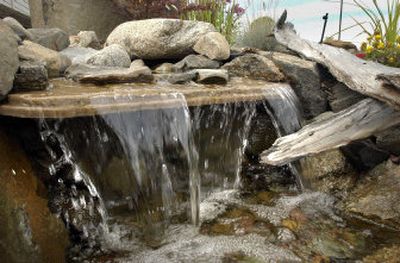
Water in the garden is magical. It adds motion, catches light, attracts birds and animals and even cools the air around it. I don’t think any garden should be without it.
In the last few years technology has come to pond and water feature construction in a big way, making it possible to put a small water feature almost anywhere in the garden or on the patio.
One of the biggest advancements is the development of pondless water feature systems. These units, often sold as kits, consist of a bottom reservoir or centipede (it’s ridged and sort of looks like a centipede) that houses a pump that is set in a basin a few inches deep and usually filled with rock.
The basin holds enough water to keep a pump submerged; often a few hundred gallons or less.
A pipe then runs from the reservoir/pump up to another basin at the top of the waterfall. The water is pumped from the reservoir through the system and cascades back into the small basin with the pump.
This leaves you with trickling water, but no open pool for kids or animals to fall into. Maintenance usually consists of checking water levels periodically and treating for a bit of algae (comes with the territory and summer heat).
You can even get an automatic filling system that will keep your water feature filled, reducing the likelihood of burning out a pump.
Another great development is the completely self-contained water feature that can sit in almost any spot in the garden. Often they are a single unit that houses the pump and water reservoir in a decorative container. These aren’t the tacky plastic buckets from a few years back. They are classy containers made from almost any material that will hold water.
If you have a container you’d like to make into a water feature there are products out there that can help you do it. Ned Bowen of All About Ponds in Spokane Valley suggests starting with an image of what you want in a water feature.
“One is limited to their own imagination,” he says. “Do some research on what parts are best suited to the image of what you want and go for it.”
There are an ever-increasing number of styles of pre-made liners that can slip into a container turning it into a water feature. To finish it, simply add a pump and spray kit.
“You can literally put it in, fill it up and you’re done,” says Bowen.
Got a special rock you want to make into a fountain or bubbler? The popularity of rock in the garden has also created a number of companies that can custom drill the rock for you – at a price.
A water feature without plants isn’t complete says Bowen.
“Plants and fish add life to a pond. You never come to a pond in nature that doesn’t have plants around it.”
Bowen finds that most people who initially don’t want plants do add them because they find there is something missing.
All but the very smallest containers will hold a floating plant or two. Water hyacinths and water lettuce are two annual water plants that simply float on the water trailing their roots underneath them. Two or three of them will fit easily into a 5-gallon container. Water plant breeders have been busy developing dwarf hybrids of many common water plants like water lilies.