
World Cup fever? It won’t happen here
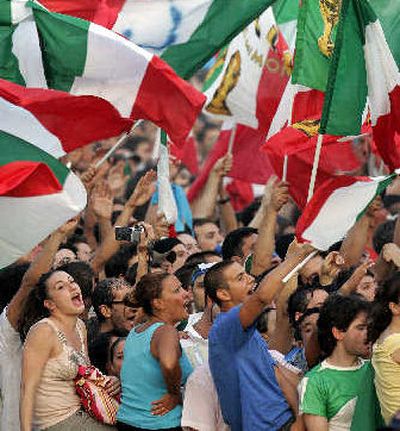
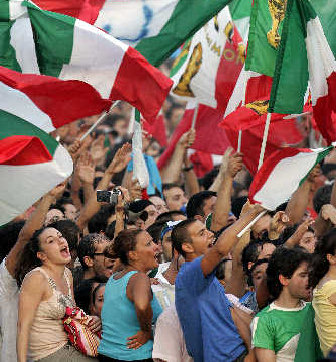
Soccer is like the tooth fairy. Millions upon millions of American kids believe in it, and then they grow up.
This rite of red, white and blue passage to adulthood is a shame, it really is, and here’s why: The greatest sporting event in all of creation concluded overseas Sunday, and most American sports fans were busy elsewhere.
No, this isn’t about the Wimbledon final between Roger Federer and Rafael Nadal. The U.S. isn’t spitting out tennis stars like it used to, but we’ve been there, done that. Another Sampras or McEnroe will come roaring out of the juniors soon.
But we’re not getting any closer to winning the World Cup, or to succumbing to the aesthetic appeal of a game that has forever been a red card on the sensibilities of domestic sports fans. Pele couldn’t sell it here for the long haul, and Freddy Adu isn’t about to inspire a lasting revolution, either.
David Beckham could come play for some Donald Trump-backed expansion team, and his wife, Posh Spice, could score her own network reality show, and it still wouldn’t matter.
If we haven’t picked up soccer by now, we’re never picking it up.
So Planet Earth revolved around the Italy-France final in Germany, while we rummaged through box scores on the last day before baseball’s All-Star break. As a nation of sports-mad people, it doesn’t make sense. We live for the Super Bowl, the World Series, the Final Four, and the Masters.
The World Cup should be a gimme, as easy as a penalty kick whistling by an American goalie.
Only the sport’s marketing agents can’t convince enough 9-year-olds to stick with it, to keep heading and kicking soccer balls into their college years and – who knows? – maybe beyond. That’s because there is no beyond.
American kids get bombarded with televised baseball, football and basketball images, enough to ultimately surrender to the inevitable. They read about $100 million contracts going to the stars in the major sports, and they see those stars in commercials, on magazine covers, basking in the spoils of the rich and famous.
They might hear about Division I soccer scholarships available to the best and brightest, but they don’t see a soccer Final Four on prime-time TV, and they don’t see the elite college talents dressed in four-figure suits and destined for seven-figure wages shaking any important-looking commissioner’s hand.
Truth is, we can’t find any more room on a cluttered landscape to squeeze in another sport, especially one with a mind-numbing amount of offside calls and color-coded cards. Especially one so taxing on the country’s ever-shrinking attention span.
On the Web site belonging to Major League Soccer (You thought it was still called the North American Soccer League, didn’t you?), scores were posted Saturday from a half dozen games played Tuesday. Twelve teams in action, and a grand sum of 10 balls found the net.
Sorry, but this is no way to win over a generation of fans addicted to 450-foot homers and rim-rocking dunks.
In the fall of 2000, after the U.S. men lost a soccer semi to Spain at the Sydney Olympics, I wrote that our basketball Dream Team would win the silver medal before the American men win the World Cup. Larry Brown took bronze in Athens, and Bruce Arena couldn’t even get into the medal round two years later.
It was everything we could do to get a shot on goal in Germany, never mind one that actually hit its mark. Weighed down by the burden of spreading the gospel across the States, and of honoring the nice little run they had in the 2002 Cup, the U.S. men were dreadful in what the sport’s elders hoped would be a seminal event in the American soccer movement.
No, the three-and-out performance didn’t help the cause. But even a stunning, Lake Placid-like victory in a World Cup final wouldn’t forever change the way soccer is perceived in this country – in fact, more than a quarter century after Lake Placid, the NHL still runs a distant fourth among the pro majors.
The women’s triumph in the ‘99 World Cup might’ve had a dramatic impact on young female athletes in the U.S., on their sense of worth and belonging in a male-dominated jock culture, but it didn’t elevate American soccer to much more than it was: a healthy, suburban (and temporary) fall-time alternative for kids steering clear of full-pads football.
Pele and the Cosmos once put 80,000 people in Giants Stadium, and became the biggest attraction in town. It only seemed like 15 minutes later when the show closed down, leaving this final impression:
If Pele can’t make it stick, nobody can.
So we will remain a nation of shortstops and quarterbacks and two-guards, and that will have to do.
The rest of the world can shut us out of their Super Bowl, and rage on about the dreadfully dull 1-0 pitching duels that somehow captivate soccer-bashing Yanks.
We can all agree to disagree. On World Cup Sunday, America kept its preferred place on the bench.