
Traveling, seeing new places a perk for diver
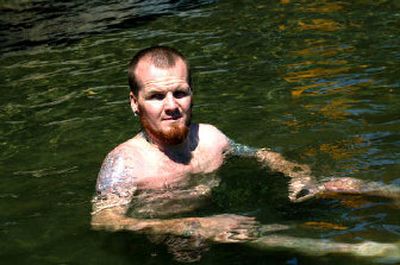
Bobby Beamis, 26, admits to taking his years as a Coeur d’Alene High School student less than seriously. After graduation, he didn’t know what he wanted to do with his life so he enrolled in a commercial diving program in sunny Southern California for fun. After all, he had enjoyed wake boarding on Hayden Lake as a kid and getting paid to be in the water sounded like an inviting career.
Beamis definitely found his niche. After graduation from a yearlong course, he earned a degree in commercial diving. Skills learned from his father’s contracting business helped him advance to the position of underwater welder. Beamis now travels around the United States to work on oilrigs, bridges, demolition and other challenging projects.
Commercial divers in the United States must be certified by a licensed diving school or by the Navy. Although considered underwater construction workers, doing much of the same work as their onshore counterparts, the labor obviously requires special equipment. Welding underwater requires helmets, which supply mixed gas and provide for communications. Different suits are provided for various jobs – such as those involving work in polluted water, warm water and cold water. A cable-suspended watertight chamber, called a “diving bell,” is used for extreme depths. Beamis has worked 600 feet below the surface.
What is your job title? “Commercial diver.”
How long have you been doing this? “Three years.”
How did you choose this line of work? “I grew up in Coeur d’Alene and wanted to get away after high school and thought dive school would be fun. And I like the weather in California. So I enrolled in the College of Oceaneering for a yearlong school to get my degree in commercial diving.”
Are you paid: (a) well; (b) more than you are worth; (c) slave wages, (d) could be better? “I am paid well once I’m actually diving.”
What is the best thing about your job? “I get to travel around the country and see new places all the time.”
What is the worst thing about your job? “Being away from my family and friends.”
Do you plan on doing this job (a) until retirement; (b) until something better comes along? “Not sure yet, I am really just getting started. We will see how long I can stand working out of town.”
Do you have any on-the-job funny stories? “We were working on a diving job and put some blue food coloring in a hot water suit and when the diver came out of the suit he was blue – not knowing that we had put food coloring. Once we put a monster mask at the end of a pipe to give a scare to the diver working on it.”
Any bad experiences? “We had tied off the crew boat to the dock when we were working on Lake Michigan. We left work for the night and came back in the morning to find the boat at the bottom of the lake due to the bilge pump going out.”
If there was a movie made about you and your job, what actor should play you? “The actor in ‘Sea Hunt’ – an old TV show.”