
U.N. sets AIDS spending goals
UNITED NATIONS – A three-day AIDS conference set a goal Friday of doubling spending to slow the spread of the disease, and 14 countries announced an airline ticket tax to fund greater access to AIDS drugs.
The special session on HIV/AIDS was marked by political haggling over the mention of condoms, safe drug use and sex education. Delegates agreed to cite condoms specifically, but language on drug use and sex education is couched in euphemisms.
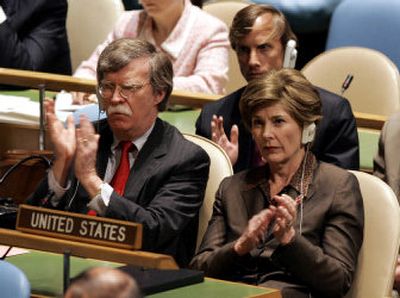
U.N. Secretary-General Kofi Annan pleaded with the assembled representatives, who included African presidents, foreign ministers from around the world and U.S. first lady Laura Bush, not to let politics derail future progress.
Bush called for an international HIV testing day, modeled on the United States’ own, and praised the U.N.’s official anti-AIDS policy called ABC – Abstinence, Be faithful and Condom use – without dwelling on the fact that U.S. funds focus on abstinence-only programs, to the criticism of many activists who say that ignoring condoms is unrealistic.
The United States sided with unlikely allies such as Syria, Yemen and Pakistan in opposing “empowerment for girls” in birth control and marital relations, and it fought to water down financial targets despite its own substantial contributions.
The United Nations estimates that it needs more than $20 billion by the end of the decade to provide preventive education and medicines to the growing number of people infected. But world leaders shied away from promising specific amounts at the conference, and so far the AIDS war chest has pledges for less than half what is needed.
Nevertheless, a group of 14 nations, led by France, announced a new mechanism to provide greater access to drugs, funded by a tax on airline tickets that is expected to raise more than $258.3 million a year.