
Deep watering aids bloomers

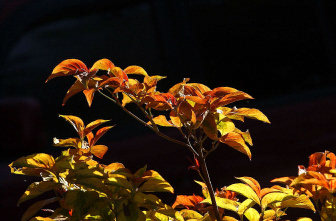
I have three small trees in my garden that are spring bloomers: dogwood, lilac and redbud. None has very many blossoms this year. They are planted where they get enough sun.
What can I do for more blossoms next year? Is it a matter of water or of the right fertilizer at the right time, or both, or something completely different?
Amy Viveiros
It’s always disappointing when the plants you look for to bring in spring don’t put on a show. It’s probably a combination of several things.
First, many plants were under stress last year from the very dry winter. They bloomed well last year because they had stored up energy to bloom before the winter but, because of the stress, may not have set buds for this year.
This spring, treat the trees to a good feeding of a balanced fertilizer (10-10-10) and even a top dressing of 2 to 3 inches of good compost. Spread both out to the drip line of the tree if possible.
Next, make sure all the trees get a regular deep soaking through the hot summer and into the fall. Don’t count on the lawn sprinklers to do this; most aren’t on long enough to get the water down deep.
To aid in watering, consider wrapping soaker hoses around the trees and then running them for several hours every 10 days through the end of October. We actually have lost more plants in the past few years because they went into winter too dry than too cold. Let me know how your trees do.
Delphiniums need help
Every year my delphiniums fall over. I have tried to stake them, using old nylons, tying them loosely.
We live at Loon Lake and can have wind, but the bed they are in is toward the street side, on the west, between our home and the home next door.
Carol Franz
I have trouble keeping delphiniums upright, too.
They get top heavy when they are blooming, and the least bit of wind or heavy rain brings them down.
You need to use some really rigid wood or metal stakes to anchor the flower spikes.
You can buy commercial stakes that have a little crook on the end, which goes around the stem, before the stake is pushed into the ground.
You can also purchase wire grid circles – with pointy “legs” to stick into the ground – so the plant can grow up through, to help hold it upright.
Make your own stakes out of pieces of rebar or long pieces of two-by-two lumber. Place them on the backside of the plant so they are hidden, then gently tie the flower stalk to the stake with nylons or heavy twine.
Don’t use light, thin twine, as it doesn’t provide any support, and the bloom can easily bend over it.