
Weathering the storm
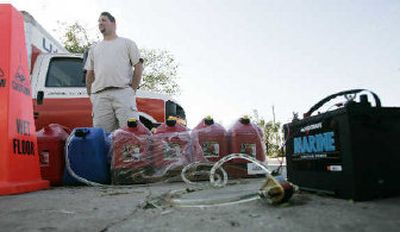
TALLAHASSEE, Fla. — It’s a couple of days after a hurricane and most of the danger has passed. Now the fight is against discomfort and misery.
There’s no electricity yet, which means no hot meals, no gasoline, no cash from the ATM. And it’s a day without air conditioning in the stifling Florida summer. Cell phone batteries are dying — and it’s hard to get a signal anyway.
One thing fixes most of the misery: electricity. Even if your house doesn’t have power, it helps when there’s electricity somewhere — maybe a nearby restaurant, or a store with cold bottled water, maybe even a bar with cold beer.
For all that government does to help people and get the basics done after a storm — performing rescues, clearing roads, fixing red lights — it’s only when the businesses get going again that life begins to seem normal.
“You might not have your air, but you can go out and drive somewhere and get something to eat with the kids because they’re going nuts,” said Richard Walker, a West Palm Beach businessman who has been thinking a lot in the last couple of years about the power outages caused by hurricanes. “People have got to get food and people have got to get fuel.”
After seeing the inconvenience faced by his community after two years of hurricanes, Walker started Power To Go, a company that provides mobile generators for businesses, primarily restaurants and gas stations.
“In 2004, we sold over 460 generators,” Walker said. “In 2005, we sold over a thousand.” This year he’ll exceed that by the middle of hurricane season.
Hurricanes can wreak havoc on Florida’s electric system. While many new power lines are underground, older ones are still strung above ground and falling trees can bring them down. For example, Hurricane Wilma last October knocked out electricity to more than 6 million people across South Florida. Many were without power for more than two weeks.
The power companies say they’re better prepared than ever to deal with hurricanes and moving to make their infrastructure more sturdy, hoping to do their part to get things back on after a storm.
But many businesses won’t be waiting for the utilities. Stung by being without power for more than two weeks after last year’s Hurricane Wilma, many are going to businesses like Walker’s to make sure they can get back up and running quickly.
Some say they don’t want to lose loyal customers. And like many people after a disaster, they feel a certain kinship with their community — they want to be able to help.
“I’ve been in business for a long time in South Florida,” said Max Alvarez of Miami, who owns about 50 gas stations around the region — and who has for years made sure he’s had enough generators to get them all running as soon as he can get gasoline after a hurricane.
The quicker he can start selling the gas, the better for everyone, Alvarez said, noting that he tries to make sure he can open so he can provide fuel for power company trucks, police cars and ambulances.
But business owners also admit it’s in their economic best interest as well. If they can’t open, they can’t make money.
“If I’m in the business to generate a profit, and if I determine that having a generator is going to help do that, of course I’m going to go buy a generator,” Alvarez said.