
Tram offers mountain scenery
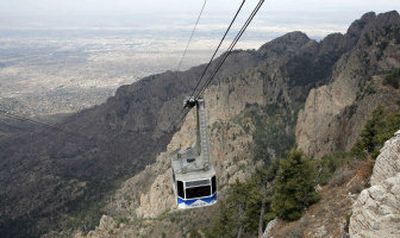
ALBUQUERQUE, N.M. – Long ago, Louis Abruzzo remembers his father taking him hiking along the rim of Sandia Peak. Across a vast chasm to the west, the boy saw a glinting skeleton sprouting from a rocky shelf.
It was the frame for what eventually became Tower No. 2 of the Sandia Peak Tramway. Yet back in the mid-1960s, there were no cables connecting the distant structure to the upper terminal, at the time under construction where young Abruzzo stood.
“I remember looking way down to see the tower more than 7,700 feet away and wondering, ‘How in the heck is this whole thing going to work?’ ” recalls Abruzzo, now president of Sandia Peak Ski and Tramway Co.
That’s what plenty of folks wondered before the tramway opened May 7, 1966. These days, few probably take time to consider what went into creating one of Albuquerque’s most iconic tourist destinations.
During its 40 years in operation, the tramway has hauled more than 8 million visitors on its 2.7-mile trip, a journey that starts 6,559 feet above sea level and climbs to 10,378 feet at the crest.
Passengers soar above cholla cactus and pinon trees near the base terminal, then pass aspen, scrub oak and ponderosa pine as the car climbs. Near the crest, Douglas fir and limber pine grow along rows of jagged limestone.
On a lucky day, riders might glimpse mule deer or bighorn sheep in the crags below. More than 200 species of birds have been spotted – from golden eagles and redtail hawks to jays, wrens, woodpeckers and songbirds.
The tramway has improved access to the Cibola National Forest for skiers, hikers, mountain bike riders and those who are just plain curious. A restaurant at the crest, opened in 1963, has been on the mountain longer than the tram.
There’s plenty to see and do, and through the years more people have enjoyed it. When the original tram cars were replaced in 1986, the new ones had bigger windows – helping children and wheelchair passengers take in the view.
“Not everyone can hike up or down a rocky trail. The tram has opened the mountain beyond the billy goats,” Abruzzo says.
“People can still drive around the back side to the crest, but it’s a heck of a lot easier to board the tram and let electricity take you up.”
The tramway has been a New Mexico fixture for almost two generations. But without the visionary efforts of Abruzzo’s father, Ben, and his dad’s business partner, Bob Nordhaus, the whole enterprise wouldn’t exist.
The men owned the Sandia Peak Ski Area on the sloping east side of the mountain. Nordhaus became enchanted by tramways while traveling through Europe in 1960 and was convinced one could deliver skiers from Albuquerque to the ski area.
The men needed about $2 million, which they raised in stock offerings, loans and lines of credit from nervous bankers. One loan required the partners to use their real estate business, the ski company and the tram company as collateral.
“They personally guaranteed loans and did other things to move the project forward that you just don’t do in business today,” Louis Abruzzo says. “They really put it all on the line. It had to be successful.”
It was, but even today the family hasn’t stopped throwing money at the machine.
Despite its age, Abruzzo emphasizes many of the mechanisms that make the tramway function are new. To prepare for this summer’s tourist traffic, for example, the towers were coated with rust-inhibiting primer and a fresh coat of paint.
The company continually performs preventive maintenance and replaces wheels, gears and carriages before they wear out.
“Not just for safety, but also for operation,” Abruzzo says. “We want to stay open another 40 or 50 years.”