
Fabric doesn’t replace weeding
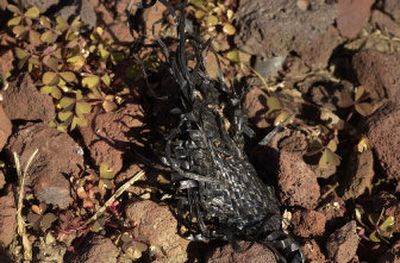

At one point in my horticultural career, I found myself cleaning out a particularly weedy bed. After pulling for a while, I decided to use a shovel to speed things up. However, the shovel wouldn’t go in more than a few inches.
The culprit? It was a layer of landscape fabric that had been covered with mulch and was now overgrown with weeds, even though the fabric was supposed to have prevented them from coming up in the first place.
Weeds are the bane of most gardeners. We keep seeking the magic bullet that will keep weeds out of the garden permanently, so my experience was just another chapter in the ongoing “how do I get rid of weeds quickly” saga.
Clearly, in this case, the project had not worked as intended.
Landscape fabric is especially woven to let water and air through to the soil at the same time it prevents weeds from sprouting and growing. It came to home landscaping from agriculture, where it served a very useful purpose reducing work for farmers among long rows of field-planted vegetables and trees.
Yet, in most gardens, several things make landscape fabric a less than ideal weed-control method.
First, to protect it from ultraviolet disintegration, it must be covered with a mulch to keep any light from reaching it. Commonly used mulches include bark, compost, top soil and rock or gravel. All but the rock and gravel break down over time, and all catch garden debris and weed seeds that tend to blow around the garden.
Second, if the weed seed finds a favorable environment in the mulch, it will sprout right there on top of the fabric meant to prevent it. Sometimes, weeds or seeds can even be brought in with the mulch itself.
Third, landscape fabric is usually installed, and then the plants are planted through it. Each time a hole is dug, soil and hitchhiking weed seeds are brought to the surface and scattered on top of the new mulch. The more holes you dig through the fabric, the more potential there is for weed seed to find its way to the surface, where it will sprout and grow.
Lastly, plant roots can grow across the top of the fabric, creating mats that are difficult to keep watered and can be damaged when it becomes necessary to remove the decaying fabric.
And that’s just what’s going on above the surface.
Below the landscape fabric, plant roots have been known to grow upward to get at the nutrients in the compost and mulch on top of the fabric. Because they aren’t going deep into the soil seeking water reserves, these roots are more prone to drought problems even if you water frequently. And organic matter from above the landscape fabric can’t make its way deeper into the soil to improve soil texture and water-holding capacity.
So, does this mean landscape fabric is always bad?
No, landscape fabric can be useful in places where mulches can be kept clean of debris and are not disturbed much. The fabric is also great as an under-layer to stone or brick paths, where it creates a barrier between the ground and the (hopefully) weed-free hardscape or your new path or patio.
When it comes to garden beds, though, it may be simpler and easier on the plants to apply a few inches of quality organic mulch to the beds and then renew it every few years. The weeds will still be kept at bay this way, yet the soil will benefit from the decomposing organic material.
It’s a sure bet that you’ll have to continue to weed, but that’s just part of the fun of gardening.