
Beauty rules for the younger set
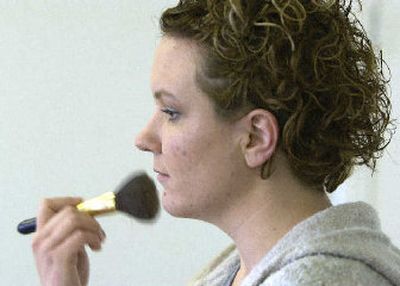
Ramona Patten remembers when her then 10-year-old granddaughter stepped out of the car to go to the mall with a fully made-up face. A friend had done the girl’s makeup, Patten says, and it was much too much for someone so young.
“I told her that wasn’t appropriate,” she says. “And that we would go back in and she could wipe it off.”
The girl, now 15, got to leave on a little lip gloss.
Patten’s story illustrates one of the many tough calls of parenting young girls: How do you weigh the child’s desire to look more grown-up with the parent’s responsibility to keep that child safe (not to mention keeping the child from looking like a circus performer)?
“I think that it is difficult and there’s a lot of peer pressure,” Patten says.
And she should know. For the last four years she’s taught a Spokane Parks and Recreation class called Beauty Tips for Teens and Pre-Teens. The class typically attracts girls between 10 and 13 years old.
“I just try to emphasize how beautiful they are and they don’t need a whole lot of other added cosmetics,” she says.
Patricia Flint’s daughter, Ashley, took the class last spring. Flint appreciated that the class focused on many aspects of “beauty,” including etiquette and good hygiene.
“I don’t think there’s anything wrong with kids looking their age,” the Spokane mom says. “Why in the world would you want your daughter to go out of the house looking 5 to 10 years older than she is?”
Flint allows her daughter to wear a little light-colored eye shadow on the weekends, as well as some clear mascara.
“I’ve told her for next year, when she’s a 7th grader, she can wear mascara,” Flint says. “She could wear some lip gloss with some color. I don’t want her wearing the eyeliner because I think it’s really important for her to look like she’s 12 or 13 years old.”
Shari Graydon, an Ottawa, Canada-based author, acknowledges that parenting young girls today is no easy task.
“It’s harder to be a parent today than it ever has been,” Graydon says. “There are exponentially more companies selling more beauty aids, products and services today and targeting younger and younger people than ever before … Parents’ task is really to No. 1 be actively countering the media messages with their own value statements about what’s important to them, about what they believe in.”
Graydon’s latest book, “In Your Face — The Culture of Beauty and You,” is written for teens and discusses the artificiality of media messages. It recently was named the best non-fiction children’s‘ book in Canada.
Parents need to talk with their children about the safety concerns that come along with them looking older than their years, she says.
“There are regrettably people in the world who see children as sexual objects,” she says. “It is a tough conversation to have. It has to be done with some sensitivity.”
Flint sees the influence of culture on her own daughter and her daughter’s friends.
“It really comes from the media and everything they see on MTV and all those different shows,” she says. “That just perpetuates them wanting to look like that even more … For me at least, I think it’s important for me to pay attention to what’s going on in Ashley’s life, with her friends and at school.”