
Preventing foot pain
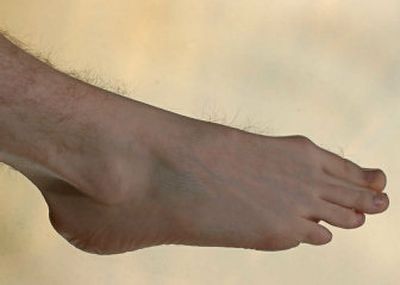
Plantar fasciitis may sound like an academic term for an overbearing agricultural landowner, but it’s actually worse than that: It’s an annoyingly common, sometimes debilitating foot problem often suffered by exercisers.
The injury involves the plantar fascia, a fibrous band of tissue that runs along the bottom of the foot between the heel bone and the base of the toes. Usually this fascia acts as a shock absorber for each footfall. But when it gets stretched, torn or inflamed – which often happens to folks who are starting a new exercise regimen – you’ve got the dreaded PF.
Severity ranges from mild (occasional throb when stepping) to extreme (nail-through-the-heel pain with any move). Risk rises with amount of impact: Activities involving walking, running and jumping carry higher risk than swimming, biking or rowing. Overweight people get more PF than others.
The best way to deal with plantar fasciitis, says Howard Osterman, team podiatrist for the Washington Wizards, is to prevent it.
This starts with the shoes, he says. For example, shoes marketed as cross-trainers “are typically not (good) for anything,” Osterman says. Most have mid-foot cutouts, ostensibly to allow for forward, backward and lateral motion. But the lack of support leads to fascial strain.
Bipeds also court trouble when they jog in walking shoes, which have a forefoot roll bar that “is not conducive to running gaits.” Running shoes work well for walking, running and jogging, he says. Replace them every 500 miles or sooner, when the heel starts to show substantial wear.
Calf stretches can help prevent plantar fasciitis, Osterman says, because tight calf muscles inhibit your ability to bend the foot. A simple stretch: Stand with heel on ground, toes a few inches up a wall, and lean forward at the hip with knee straight. Hold for 30 seconds; do three stretches per leg.
If you have recovered from plantar fasciitis and want to strengthen the supporting musculature, Osterman suggests using your toes to pick up an object, such as a marble. Focus on form, not success rate. Do three sets of 10, twice a day. Don’t stretch the fascia itself; this can cause strain.
If you fall victim, treat symptoms within the first week, starting with an anti-inflammatory like ibuprofen and ice at day’s end for 10 minutes. Osterman prefers immediate treatment because the injury takes a while to heal (ask anyone who’s had it) and the change in gait caused by the pain often leads to knee, hip or low-back problems. He also prescribes alternating five-minute heat and ice dunks – warmth increases blood flow, cold reduces swelling – for a total of 30 minutes.
“Ligament injuries … take four to six weeks of treatment to improve, sometimes more,” Osterman says. Limit painful activities as much as possible. To keep active patients moving, Osterman will sometimes tape the fascia, but don’t try that yourself; taping it improperly could exacerbate your injury. Insoles like Superfeet, Spenco and SofSole are also helpful, both in regular and exercise shoes.
For repeat sufferers, Osterman recommends custom-molded orthotics, which provide tailored arch support and can correct for gait problems that could lead to re-injury.