
Definitely the real ‘Deal’
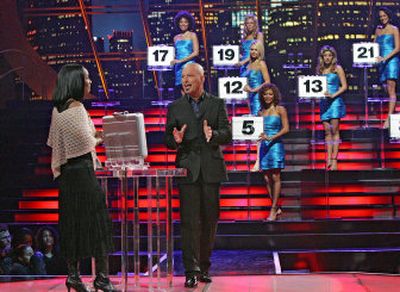

Howie Mandel sees “Deal or No Deal” as much more than a simple game show with a potential $1 million prize.
“It’s what America is all about,” says Mandel, who hosts the NBC show that first aired for a week in December and was such a hit that it’s now a twice-weekly staple.
“It’s about a dream and how, with no skill, maybe a little luck and very little risk, you can change your life. Nobody should walk out of there without a lot of money.”
But before walking out with a cache of cash, contestants must make smart money moves in a Vegas-like atmosphere, with a frenzied studio audience, a glowing stage set and Mandel as the maestro with a microphone.
Players pick one of 26 closed briefcases containing money – from $1 million to 1 cent. They then make choices to keep or “sell” their case, depending on the amounts of money revealed as the other cases are opened.
“It’s easy to be at home screaming at the TV but, in person, the tension, the excitement, the pressure to do the right thing is part of it,” says Mandel.
The longtime comedian/actor initially had no interest in doing the show.
“My image of a game show host was someone reading trivia questions, and I have the attention span of a gnat,” he says.
“But this is a multitasking kind of position. It lets me ad-lib and uses everything from my stand-up comedy to dramatic work. In any one game we can go from laughing hysterically to breaking down and crying. You can feel the emotion in the room.”
The unscripted show, taped in Los Angeles, features one contestant at a time. That player’s back story, revealed in an introductory chat with Mandel, should touch viewers, according to David Goldberg of Endemol USA, which produces the program.
“We tried to steal a page out of ‘Extreme Makeover: Home Edition.’ We’re trying to cast people who are likable and in need,” Goldberg says.
“If we don’t think America is going to root for them, then they’re not going to work. We really try to program that element, with the husband calling in from Iraq, the family and friends in the studio.”
The contestants’ choices are not always clear-cut. Sometimes husbands and wives disagree, or friends encourage competitors to go against their instincts.
“Sometimes the decisions are not for the best, and I can’t encourage or push anyone,” Mandel says. “They realize in a minute: Do you want the $100,000, or do you say, ‘No deal’?
“They see a chance for a million. They see that number, and they want to keep playing.”
Mandel says most contestants get emotionally caught up in the excitement.
“Every man who has been on the show has cried,” he says. “We have to stop taping sometimes when people get so emotional.”
The original show, created in the Netherlands in 2002, has spawned versions around the world, each with individual tweaks.
“My youngest daughter can enjoy it because you only need second-grade math to understand it,” Mandel says.
Goldberg says Mandel’s skills play perfectly to the U.S. version.
“Howie is like the benevolent character advising and rooting for the contestants,” he says.
During one taping that reached a dramatic point, Mandel was scheduled to leave for Las Vegas.
“Howie said, ‘If you can get a helicopter, that would save me a ride to the airport and we can finish taping,’ ” Goldberg says. “We have access to the ‘Fear Factor’ helicopters, so we had one land on the roof of the studio.”
For Mandel, the hardest part of the show is watching players make bad choices.
“I want the contestants to do the right thing,” he says. “I would love every show if everyone would walk away a millionaire.”