
Israel polls predict exit support

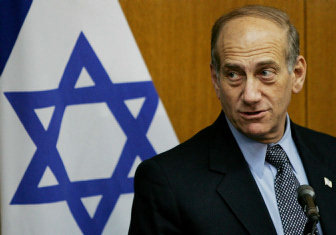
JERUSALEM – Worn down by a bloody five-year Palestinian uprising, Israelis look set for a seismic shift in Tuesday’s election, discarding their polarizing dreams of either settling Jews in a Greater Israel of biblical dimensions or trading much of that land for peace with the Palestinians.
The emerging consensus is to unload much of the West Bank, dismantle Jewish settlements and withdraw behind a barrier in exchange for some normalcy, though not a peace deal with the Palestinians.
“There is a change, a maturity, an understanding that we can’t go on like this,” sums up Haim Yavin, the Israel TV news anchor who has covered 11 elections. The public mood, he said in an interview, is that “enough is enough, let’s get on with the business of living.”
This far-reaching change of heart, if it translates into votes the way pollsters predict, would remake Israeli politics by propelling the neophyte Kadima Party to power and opening a broad center between Israel’s right-wing Likud and left-leaning Labor.
Kadima’s leader, acting Prime Minister Ehud Olmert, is tapping into the new consensus with promises to withdraw by 2010 to a final border. In so doing, he has turned the election into a referendum on the fate of land Israel captured in the 1967 Mideast War.
The drama began in November when Prime Minister Ariel Sharon quit his Likud Party to form Kadima with disaffected Likud and Labor heavyweights, creating a party that shot to the top of the polls and has stayed there even after Sharon’s devastating stroke on Jan. 4. As for giving up land, Sharon already forged that template in September when he pulled Israel out of the Gaza Strip. So what his successor, Olmert, is proposing hasn’t come as a complete surprise to the public.
Throughout the turmoil of the past four months, polls have held surprisingly steady, predicting Kadima will win just under one-third of the 120 seats in parliament, or about double that of Labor and Likud. That would enable Olmert to form a coalition with either of those parties, or both, or some of the smaller ones.
Yet as the election draws near, pollsters are increasingly jittery. Kadima has lost a bit of ground in recent weeks, 10 percent of voters are still undecided, and many of those who said they would vote for Kadima could change their minds at the last minute because the party has no proven track record.
Monumental though the stakes are, this has been one of the dullest campaigns in Israel’s 58-year history, largely because Kadima has been seen as the sure winner. And the Palestinians next door also seem largely indifferent.
They feel they can’t stop Olmert from imposing his border, which would grab key areas they want for a state, including large West Bank settlement blocs and parts of Jerusalem. And with the Islamic militant Hamas poised to form the next Palestinian government after its January election victory, neither Palestinians nor Israelis expect a resumption of peace talks.
The three candidates for prime minister – Olmert, ex-union boss Amir Peretz of Labor Party and former Prime Minister Benjamin Netanyahu of Likud – are familiar faces lacking the charisma of a Sharon.
Olmert, 60, has been in politics for more than three decades, including as Cabinet minister and mayor of Jerusalem. He has earned the reputation of being a blunt, somewhat aloof man who can get things done and has a passion for fine cigars and soccer.
He has softened his demeanor since filling in for Sharon, but remains “just mean enough to make a good prime minister,” commentator Amnon Abramovitz said on Channel 2 TV.
Netanyahu, 56, who opposes most territorial concessions, is given little chance of reclaiming the top job he held from 1996 to 1999. The diminished party he took over after Sharon quit is running third in the polls.
Labor, the party that ruled Israel for its first 29 years as a state, has been revolutionized by the surprise election of 53-year-old Peretz as its leader, a Moroccan-born Sephardi in a party dominated by European-descended Ashkenazim. But Peretz’s agenda of greater economic equality has not taken off, because voters are still preoccupied with the Mideast conflict.
Unless there’s a dramatic upset, a last-minute Palestinian attack – or the pollsters have wholly misread the changed Israeli political landscape – it appears Olmert could only be denied the premiership if right-wing and religious parties opposed to territorial concessions form a “blocking majority” of 61 seats. For now, they seem short of that threshold.