
Kennedy’s home district cynical yet supportive
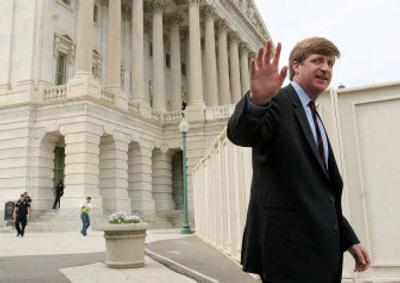
PAWTUCKET, R.I. – The bad news for Rep. Patrick Kennedy: The voters of Rhode Island do not, by and large, seem to believe his version of what led to a car crash early Thursday outside the U.S. Capitol.
“I don’t buy the medicine story,” said Michael Rossi, a nurse waiting in line at a news and video kiosk in this small downtown. He said he thought alcohol was to blame for the crash, not the prescription drugs cited by Kennedy.
Now the good news for Kennedy: The voters of Rhode Island – including Rossi – also don’t seem to care.
“It’s a separate issue,” said Rossi, who said he would remain a Kennedy supporter. “He’s got maybe an alcohol problem. That doesn’t make him a bad representative.”
Similar stories were told again and again across Kennedy’s district, which covers a swath of suburbs, strip malls, and run-down mill towns around the northern and eastern borders of the state. From Pawtucket to Woonsocket, the six-term representative’s sins were often forgiven almost before they were admitted, by people who said they were motivated by his hard work, his power or just the traditional indulgence granted to Kennedys in this region.
“Somehow, I still love him,” said Helen Lisi, a retiree from Lincoln, R.I., who was eating with her daughter at a pub on Friday in Cumberland. Maybe it was all that Kennedy had done for senior citizens, she said.
Kennedy, 38, the son of Sen. Edward Kennedy, D-Mass., came to Rhode Island to attend Providence College, and stayed to begin a political career in the state legislature. He was first elected to the U.S. House in 1994, and won his last election with 64 percent of the vote.
This election year, Kennedy, a Democrat, didn’t even have an announced Republican opponent until Friday, when a former Foreign Service officer said he would run.
Still, even a national controversy and a new challenger aren’t likely to alter the election storyline for Kennedy, said Darrell West, a professor of public policy and political science at Brown University.
“Kennedy is very popular in Rhode Island,” said West, who wrote a book on the representative, “Patrick Kennedy: The Rise to Power,” in 2000. “And the fact that he’s admitted he needs help will help defuse the situation.”
That projection of election-day support was borne out in interviews with Kennedy’s constituents: nearly all said his behavior wouldn’t change the way they voted. But under that surface, there was a complex relationship that included empathy and deep cynicism.
“I don’t buy it at all, knowing the Kennedy history,” said Sydda Merritt, who was sitting behind the counter at Pawtucket Pawn Brokers in this near-empty downtown. She meant the story about Kennedy using prescription drugs but not alcohol. “It kind of makes you shake your head and say, ‘He’s just like the others,’ ” Merritt added.
Many of those interviewed said they were reminded of the fatal car accident Kennedy’s father was blamed for in 1969 on Chappaquiddick Island. Others said they felt that Patrick Kennedy had received special treatment when U.S. Capitol Police drove him home without testing him for the presence of alcohol.
But others read the same stories and saw a man who was under undue scrutiny because of his name, and under pressure from the high political expectations the name brings.
“People are still human,” said Frederick Pesaturo, having a mid-afternoon snack at the Pastry Gourmet in Cumberland. “He’s got limitations like we all have.”