
Experts: U.S.-Libya link not a shock
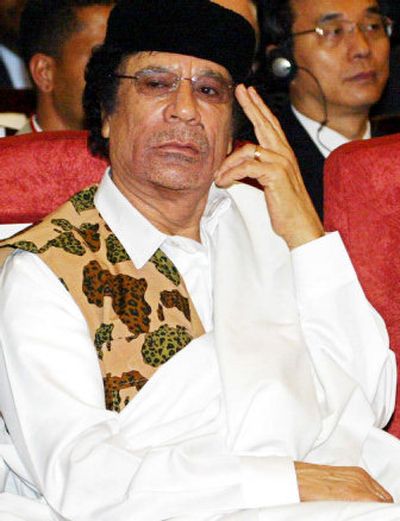
CAIRO, Egypt – The normalization of U.S.-Libya relations is a natural marriage of an American administration desperate for friends and oil in the Middle East and a government that needs to open its economy to the outside world, Arab and exiled Libyan observers said Monday.
The announcement was called proof that promotion of democracy is no longer Bush administration priority, as it grapples to hold Iraq together and turns its attention toward building alliances against Iran over its nuclear program. Libya has been ruled by Moammar Gadhafi since he seized power in 1969.
“The timing can be explained by a need for the United States to have a positive breakthrough in the Middle East,” said Mohamed Sayed Said, a political analyst at the Egyptian government-run Al-Ahram Center for Political and Strategic Studies. “With Libya, Washington gets a regime that has converted itself from radicalism to accommodation.”
“It’s self-evident,” Said went on, “that there is a retreat from democracy and that in the current atmosphere, the United States is aligning itself with nondemocratic regimes. Democracy is not going to be the point of departure for relations between the United States and governments in the region.”
Analysts expressed a lack of surprise over the U.S.-Libya rapprochement, saying it had been inevitable since Gadhafi gave up Libya’s nuclear weapons program three years ago.
The United States lifted its economic embargo against Libya in 2004, and at least six U.S. oil companies have resumed drilling and exploration that had been suspended in 1986. Libya possesses the world’s eighth-largest oil reserves, but the U.S. embargo had decreased production by keeping new equipment and technology out of the country.
Libya is often listed by human rights groups as one of the world’s most repressive governments. A recent survey by Freedom House, a U.S.-based organization that promotes democracy worldwide, put Libya in the bottom five countries in terms of the free flow of information.
Libyan exiles expressed ambivalence to the U.S. outreach to their homeland. “It might be good for the Libyan people. It might be easier to get rid of Gadhafi in a Libya that is more open,” said Mohammed Zayan, an activist exiled in London. Libyans did not put much stock in U.S. pressure for democracy, he said. “No one was gambling on it.”