
EU aims to open Germany’s chimneys to foreign sweeps
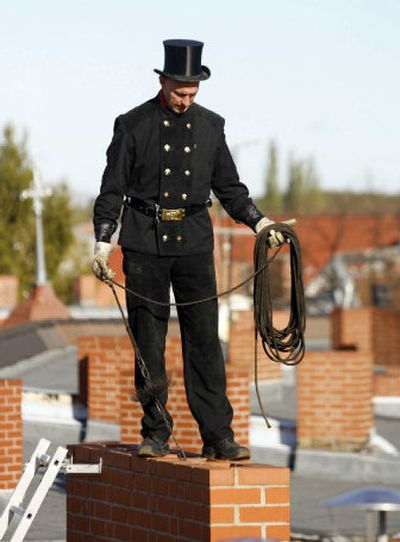
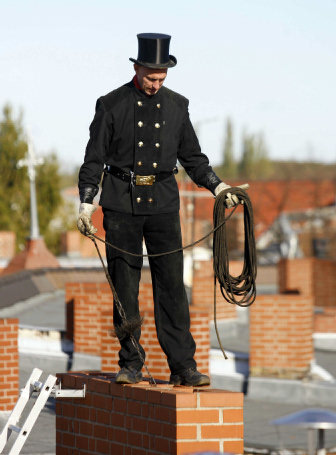
FRANKFURT, Germany – The German chimney sweep’s steely resolve in the face of vertiginous heights, soot and even spiders is facing a tougher enemy: European Union bureaucrats who want to open the trade up to foreign competition.
Chimney sweeps have been a part of the German fabric of work and culture since the Middle Ages. They are trusted figures in this country where tradition still holds sway despite advancing technology and open borders.
But the trade is now the focus of the EU as it tries to enforce laws giving all residents access to jobs anywhere in the 25-nation bloc. Unlike other trades, chimney sweeps in Germany enjoy a near monopoly on their business – something that has not really changed since the first guidelines overseeing the profession were set down in the 17th century.
Though the law technically allows foreigners to become sweeps, the reality is that numerous barriers make it all but impossible for non-Germans to find work in the trade.
There are 7,888 districts across Germany, each one assigned one sweep who may employ one or two helpers. Besides keeping chimneys clean, they also perform maintenance and annual safety checks on modern heating systems.
Residents can only use the sweep assigned to their area and are forbidden by law to try and find someone cheaper. That creates a virtually insurmountable obstacle for any outsider trying to break into the business. “That has its good sides and should stay that way, because (the sweep) doesn’t depend on his customer in a way that he would have to be afraid that if he will issue a negative report, the customer will take someone else the next time,” said Johannes Toex, a master chimney sweep from Schmelz in Saarland, a small region bordering France, who oversees some 2,000 households.
The EU feels such arguments go against basic EU treaty freedoms dating back to 1957 that gives all EU citizens the right to work anywhere in the bloc.
In 2003, the European Commission sent the German government a letter saying it was concerned about the lack of competition and the fact that foreign sweeps were unable to find work.
“The German Government stated that it was prepared to amend the law on chimney sweeps and proposed a timetable for doing so,” the European Commission said, adding that such a change was set for 2006. When nothing happened, the EU sent a legal opinion, the final step before taking Germany to the European Court of Justice.
The EU’s decision to pursue Germany over this relatively minor infraction is evidence of the EU’s resolve to keep borders open and opportunities available, said David Gregory, a labor law professor at St. John’s University in New York.
“Any manual work is going to be dramatically underbid by workers who offer the same quality at a lower price,” Gregory said. “That’s going to occur in huge ways certainly all over Western Europe.”
Until 1937, chimney sweeps roamed Germany looking for work but Heinrich Himmler, then acting interior minister for the Nazi government, mandated that sweeps could be responsible for only one district, and must be German. The law was amended in 1969 to allow for non-Germans, but kept the monopoly in place.