
Shareholders rail at manager-led buyouts
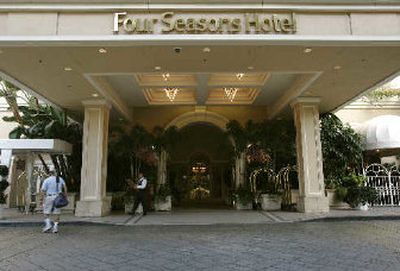
NEW YORK — As Four Seasons Hotels Inc. shareholders contemplate a $3.7 billion offer to take the company private, one in particular is in line for the equivalent of a stack of suitcases stuffed with money: Isadore Sharp. The chairman and CEO of the luxury hotel chain will get a special payment of $288 million if the deal goes through.
While outsized, Sharp’s bounty isn’t unusual for executives at companies being taken private. Even some buyout firms say the deals, by their nature, put them and the managers who join them ahead of shareholders. And that’s a cause for concern, according to some corporate governance experts.
In the proxy for a planned $6.3 billion buyout of Aramark Corp., the nation’s largest foodservice company, the buyout team — which includes private equity units of Goldman Sachs and JPMorgan plus the private investment firm Thomas H. Lee Partners — said it “attempted to negotiate the terms of a transaction that would be most favorable to themselves, and not to stockholders of the company and, accordingly, did not negotiate the merger agreement with the goal of obtaining terms that were fair to such shareholders.”
Fair enough — except for the fact that the buyout team includes Joseph Neubauer, Aramark’s chairman and CEO.
That’s part of a troubling trend, according to James Owers, a professor of finance at Robinson College of Business at Georgia State University. When a company’s managers team with buyout groups, “there’s an inherent conflict of interest,” he said.
“Management is supposed to serve shareholders and get the best price possible,” added Robert Dammon, a professor of finance at Carnegie Mellon’s Tepper School of Business. “On the other side, the same management is serving as the buyer and wants to sell the company as cheaply as possible.”
The 529 management-led buyouts announced globally so far in 2006 are worth a combined $133.1 billion, according to deal tracker Dealogic. Under the deals, management and a group of outside investors pool their money and usually take on debt to buy the shares of a public company, taking it private.
Private equity funds have become increasingly popular as a way for wealthy investors to get higher returns than the stock market offers. Leon Cooperman, who runs the $4 billion-plus Omega Fund has estimated that private equity funds have about $300 billion under management.
As a testament to its rising stature, “Venture Capital and Private Equity” has become one of the largest elective courses at Harvard Business School.
Just this week, businesses as diverse as magazine company Readers Digest Association Inc. and radio and outdoor advertising company Clear Channel Communications Inc. and have said they are going private. On Thursday, Readers Digest said it agreed to a $1.6 billion cash buyout deal, and Clear Channel shareholders agreed to an $18.7 billion buyout.
Shareholder suits have become a common part of buyouts. Shareholders at casino company Harrah’s Entertainment Inc., hot tub company Jacuzzi Brands Inc. and Aramark have sued over the proposed deals, protesting that the company’s boards didn’t work to get the best price.
Eminence Capital LLC, which in May owned 7.8 percent of Aramark’s common stock, calculated that an original $32 a share offer by a buyout team led by CEO Neubauer would yield the buyers an “egregious” rate of return of 35.7 percent on their investment if the company’s revenues and margins improved.
“This staggering return would accrue to the buyout group and not your public shareholders,” according to a letter filed with the Securities and Exchange Commission by Ricky Sandler and Seth Rosen, executives at Eminence, a New York investment manager.