
‘Little Prince’ remains king
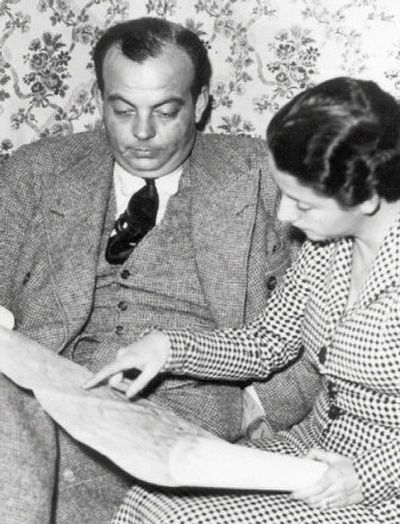
Even though he’s approaching retirement age, “The Little Prince” is still going strong.
The book by French aviator and author Antoine de Saint-Exupery was first published in English and French in the United States in 1943. It was released in Saint-Exupery’s native France in 1946, making this year the 60th anniversary of its publication in his homeland.
Sadly, Saint-Exupery never saw that day; he disappeared over the Mediterranean in 1944 while flying on a military mission against the Nazis.
The children’s tale with adult appeal has been translated into more than 174 languages and dialects in more than 65 countries. Only the Bible, Torah and Koran have been translated more.
It has sold more than 75 million copies worldwide and continues to attract new readers. Last month, for example, “El Principito” was ranked fourth among fiction books sold in Argentina.
“The Little Prince” grew out of a drawing of a blond boy that Saint-Exupery made on a napkin while living in New York City during the early days of World War II. His editor encouraged him to write about it.
The book is a semiautobiographical tale about a pilot stranded in the desert who makes friends with a young prince who is a space traveler from a small asteroid.
The boy tells the pilot about life on his asteroid and of the flawed, all-too-adult characters – including a king, a geographer and a drunkard – whom he has met on his travels.
The prince meets a fox while on Earth and learns the main lesson of the book: “One sees well only with the heart. The essential is invisible to the eyes.”
The story ends with the prince allowing a poisonous snake to bite him so he can return to the beloved rose he left behind at home.
Anne Alton, a professor of children’s literature at Central Michigan University, says the book enjoys universal appeal because it “addresses human values.”
“There is a notion of love in the book and that notion of being willing to do everything to achieve your goal,” she says. “He is willing to sacrifice his life to return to that rose.”
Philosophically, the prince can be considered as being on a higher state of consciousness on his asteroid and coming down to a more prosaic way of life on Earth, Alton adds.
“At the end, he realizes he wants to go back to the ideal,” she says.
“He chooses his rose over the hundreds of others (on Earth) who might even be more beautiful.”