
Volunteer firefighters feel the heat in training
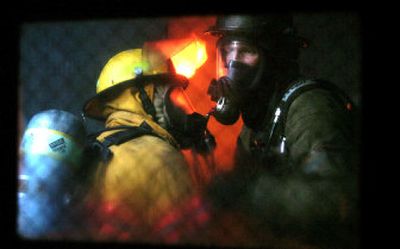
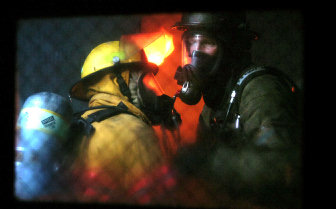
Small-town firefighters don’t always get the same training as their big-city counterparts.
It’s just too expensive for all-volunteer departments to send their people to training at Washington’s state academy or other locations.
But on Saturday, the training came to Rockford, giving volunteer firefighters from districts serving Fairfield, Rockford, Latah and Waverly the chance to practice battling home fires.
Some had never been in a burning building before. They spent the day exploring different scenarios in the Washington State Fire Fighters’ Association’s new simulator.
“It’s valuable if you’ve never been in a situation like that, to get a feel what the heat would be like,” said Fire District 2 Chief Adam Brannon.
The simulator is a large trailer, divided into small, metal rooms. It can be configured different ways to mimic what it’s like to enter through a front door, descend into a burning basement or climb onto a roof to cut holes for fire ventilation.
From inside a small, protected room, instructor Ken Blake watched the action through a fire-safe window.
He used a computer to control the fire, raising and lowering propane-powered flames on a simulated stove and bunk bed. The metal surfaces inside the trailer won’t combust. Hay was used to simulate the smoky conditions of a real burning building.
“You’re going to feel the heat going up your pant leg, so get down through the heat,” Blake told a crew of three firefighters before they began a simulation of what it would be like to enter a burning basement.
“If they use the right hose pattern, I knock it down,” Blake said as the crew tackled the stove fire.
A computer provides information about the flames’ intensity and the temperature inside the trailer. If it gets too hot, the system automatically shuts down to protect the firefighters inside, said Blake.
Emergency switches inside and outside the trailer can also be used to shut the system down.
“We don’t get enough structure fires down here to be proficient,” said District 2 volunteer firefighter Greg Wernz. “Experience is one of the best teachers.”
The Washington State Fire Fighters’ Association paid about $300,000 for the simulator and the truck to haul it, said Blake, who is the association’s treasurer. The cost was paid for with volunteer districts’ and individual members’ dues.
It’s well worth it, he said, adding that there are more than 17,000 volunteer firefighters in Washington who need more training.