
Memorial march
Sept. 11, 2001. For those of us who experienced the horror, disbelief and unbearable emotion of that day, it will be something we’ll tell our grandchildren about until the day we die. It’ll be likened to our grandparents relating the events of Dec. 7, 1941, to us – the shocking bombing of Pearl Harbor.
But some good things rose from the rubble and crushing despair. Humanity stepped in. People who had never before come forward to help in disaster situations donated money, time and most importantly, themselves. Thousands stood in lines at blood banks across the country hoping their blood could save the life of someone who’d been injured in the biggest set of tragedies to ever hit our soil.
People wanted to help, they needed to. In ways that may seem insignificant to some, people came to give what they had. And in the spirit of the little drummer boy who told baby Jesus he had nothing to give but his music – the bagpipes came.
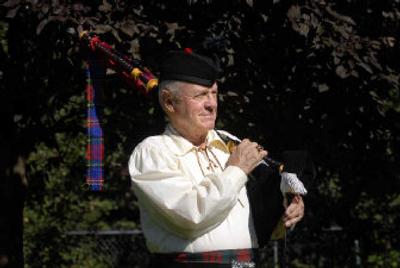
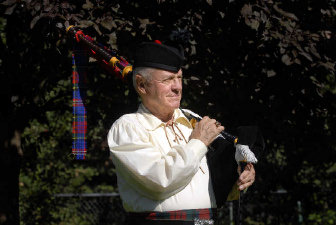
Seven thousand, eight hundred and twenty of them from all over the world descended on New York City just seven months after the fall of the Twin Towers, destruction of the Pentagon and the crash of Flight 93. On April 6, 2002, they flew in from Scotland, Australia and Denmark. Pipers and drummers came from Canada, France and many other nations. They proudly wore their kilts in bright tartans, and marched from 42nd Street up and around Central Park, all the way to 72nd Street on Sixth Avenue. They marched for the dead. They marched for the living. The drones of almost 8,000 pipes sang to the city of New York in a healing memorial on National Tartan Day. Dellas Eaton of Coeur d’Alene was one of them.
“The streets were barricaded and we were split up in groups of 150 separated by half a block. We played ‘Scotland the Brave,’ ‘Cock of the North,’ ‘America the Beautiful’ and a couple others,” Eaton remembers.
Fifty-two groups of 150 pipers marched the wounded New York City streets in an attempt to show their support.
“The people cried,” said Eaton. “As we marched past I could see the tears running down their faces. The New York police and fireman pipers, who lost several hundred of their members, had marched right ahead of us which made it that much more emotional.”
Wave after wave the pipes and drums marched, led by well-known Scotsman, Sean Connery. That evening groups of pipers went from pub to pub playing for 20 minutes in each.
“At one pub Sean Connery stood only a few feet from me the whole 20 minutes we played,” said Eaton. “I remember thinking if my wife were there she’d throw herself at his feet!”
There’s no doubt the entire United States felt the impact of the four planes that crashed on Sept. 11. From people like Alan Jackson who gave what he knew, a song that makes us remember how we felt, to the changing of the guard at Buckingham Palace, who played our National Anthem for the first time in history, to the thousands of bagpipers who traveled the world to bring a little cheer and support to those who needed it – we all felt the shock in some way.
“While I was there I purchased a ticket to go up on a platform and see ground zero. By that time it was a big pit. I thought I’d felt the impact of it until I turned and walked back down the platform. Five golf carts with wire baskets strapped to them, came out of the pit carrying a body in each, draped with an American flag. This was seven months later and they were still finding bodies. That’s when it hit me the hardest.”
A nearby church was used as a gathering spot for the men and women helping to clean up the debris. The church gave them food, shelter and maybe a little comfort.
“The church was surrounded by a tall, wrought-iron fence with spires on top,” said Eaton. “Police and fireman hats and the jackets of those who’d been killed hung from them, along with pictures and posters put there by family or friends. That fence really touched me.”
Eaton plays for the Albeni Falls Pipes and Drums band out of Sandpoint. He proudly wore their Red MacPherson tartan down the streets of New York City adding his band’s sound and look to the mix.
“People all over the world came together,” he said. “It was one of the proudest moments I’ve ever known.”