
Clinton’s global group raises $1 billion in aid
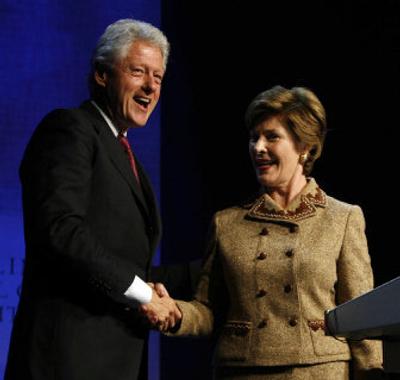
NEW YORK – Former President Bill Clinton rallied his coalition of the giving once again, persuading corporate honchos, philanthropists, do-gooders and even the U.S. government to ante up at least $1 billion to tackle some of the world’s most stubborn problems.
The Clinton Global Initiative, which was on track to match the $2.5 billion raised during its inaugural gathering last year, kicked off a three-day conference Wednesday with a $10 million pledge of government funds from first lady Laura Bush to fund a project designed to provide clean drinking water for millions of Africans by 2010.
Former AOL chief Steve Case’s foundation chipped in an additional $5 million for the project, called PlayPumps, which uses merry-go-rounds to create potable water for schools and villages.
“PlayPumps are fueled by a limitless energy source – children at play,” the first lady said before a standing-room only gathering in midtown Manhattan of more than 1,000 of the world’s most influential and deep-pocketed movers and shakers, many of whom are in town for the annual United Nations General Assembly.
The first lady’s pledge was the first of another outpouring of philanthropy and volunteerism focused on solving problems in four main areas: poverty, climate change, health, and religious and ethnic strife.
The Clinton Global Initiative “was designed to tackle big, global challenges in bite-size pieces,” Clinton said before an audience that included Microsoft founder Bill Gates and Virgin Airlines mogul Richard Branson.
The largest donor Wednesday was a group called Opportunity International, which pledged $500 million in microloans by 2010 to lift people out of poverty. Other pledges included $100 million from the venture-capital firm KPCB to develop clean energy technologies.
“While we certainly like commitments with lots of zeros behind them, when you consider the hundreds that were made and kept this past year, some of those with smaller budgets had very large impacts indeed,” Clinton said.