
Triplet calves beat the odds
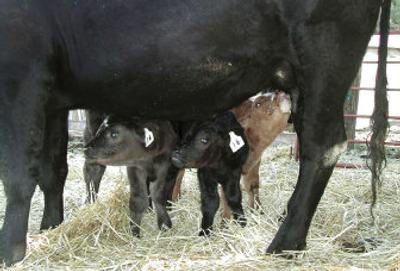
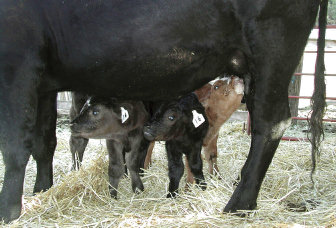
PRINCETON, Idaho – Odds-defying triplet calves, a female and two males, that were born on a north-central Idaho ranch are healthy and growing, said the rancher and Washington State University College of Veterinary Medicine employee who found them in his pasture.
Experts at the school say the odds of triplets born to beef cattle are about 1 in 105,000.
“I couldn’t believe it,” said Mike Carpenter, who with his wife, Gayle, raises registered Simmental beef cattle about four miles south of this Latah County town near the north slopes of Moscow Mountain.
Carpenter is also a herds manager at the vet school at Washington State.
“I don’t want too many of these,” he said, after finding the calves last week. “Once is enough.”
Neighbors are visiting with cameras.
Professors at the vet school say they’ve only seen triplets in dairy cows.
But that’s not the most amazing thing about last week’s phenomenon, says Ahmad Tibary, a professor of large animal breeding and obstetrics at WSU.
“The most exceptional thing about these triplets is that all are doing well,” Tibary said.
Keeping the newborn animals alive wasn’t easy, Carpenter said.
When the Carpenters found them, two of the triplets had apparently already nursed from their mother, but the third was lying down and needed help.
They fed it frozen colostrum, or early mother’s milk, colostrum pills, milk from other cows – and did their fair share of worrying over the tiny, 30-pound heifer calf – to keep it alive. They let this smallest of the triplets nurse on an obliging young cow with a single calf of her own.
But the heifer calf, named “Yesterday,” will start to bawl within a few minutes of being separated from any of her siblings, the couple said.
“Today” and “Tomorrow,” the two male calves, will be kept as potential breeders, Mike Carpenter said.
The outlook isn’t so rosy for “Yesterday,” because heifers, when part of a multiple birth involving males, are very often sterile.