
Gates warns Iraqis to step up
BAGHDAD – Defense Secretary Robert Gates arrived in Baghdad on Thursday to convey a blunt message to Iraq’s leadership three months after the United States began an increase of more than 28,000 troops in the country. “The clock is ticking,” he said.
Gates said he will urge Iraqi Prime Minister Nouri al-Maliki and other leaders in meetings Friday to act more quickly and boldly to achieve reconciliation between the majority Shiite, Sunni, and Kurdish political factions – warning that U.S. troops will not remain in the country indefinitely.
“The Iraqis have to know that this isn’t an open-ended commitment,” Gates told reporters traveling with him Thursday, stressing he does not intend to be “subtle” in meetings with Maliki and others.
Gates’ visit comes at a critical midpoint of the Bush administration’s new “surge” strategy in Iraq. Under the plan announced in January, tens of thousands of U.S. and Iraqi troops have flowed into Baghdad and Anbar province in an effort to increase security and buy time for al-Maliki’s fledgling government to gain the strength and unity that are preconditions for an enduring peace.
But as Pentagon officials point out, the time comes at the heavy price of increased U.S. military casualties, and cannot be squandered.
“Frankly, I would like to see faster progress,” Gates said shortly before flying to Baghdad.
Gates said he will push the al-Maliki government to reach consensus on key legislation that would govern the country’s oil resources and allow some former members of Saddam Hussein’s Baath Party to return to their jobs. The Iraqi government laid out benchmarks for those and other key legislative goals last fall, but has largely failed to meet them. “Getting some of these laws enacted communicates a willingness to work together” and could ultimately reduce attacks, Gates said.
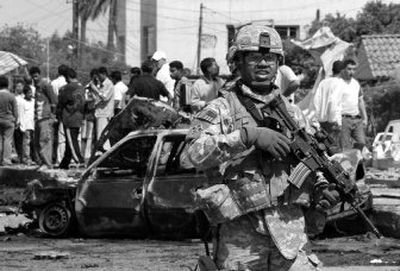
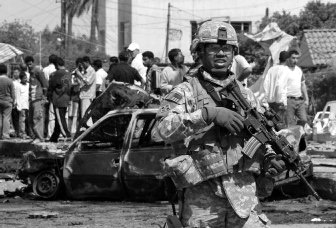
Gates is visiting following devastating suicide bombings that killed more than 160 people in the capital Wednesday, another in a rising number of suicide vehicle attacks that U.S. military officials say Sunni insurgent groups are using to attack Shiite neighborhoods in an effort to inflame sectarian fighting.
Over six weeks until mid April, sectarian violence – as measured by attacks on civilians – has dropped about 20 percent, but strikes by suicide bombers wearing vests or using explosive-packed vehicles have risen 30 percent, according to U.S. military reports.
The violence continued Thursday, when a suicide bomber slipped past security barriers to kill 12 people in a mostly Shiite district. The attack showed yet again the ability of insurgents to penetrate Baghdad’s heavy security presence.
Thursday’s attacker blew himself up next to a fuel tanker within 500 yards of Iraqi President Jalal Talabani’s home in the Karradah district. Talabani, a Kurd, was not believed to have been the target. Two Iraqi soldiers were among the dead, and 34 people were wounded, police said.
At least 46 Iraqis were killed or found dead nationwide Thursday as al-Maliki said an “open battle” was being waged for control of his nation.
The U.S. announced three more troop deaths – two soldiers killed Wednesday by a roadside bomb north of the capital, and another soldier killed the same day in a small arms fire attack in southwest Baghdad.
Two British soldiers were killed and three others wounded Thursday by an explosion in southeastern Iraq. The attack occurred in Maysan province, a day after British troops transferred control of the area to Iraqi forces.