
DNA helps track down poachers
CALDWELL, Idaho – A knife with traces of blood found in a suspect’s truck. A few hairs picked up at the crime scene hundreds of miles away. Authorities feared the victim was dead, perhaps already dismembered and eaten.
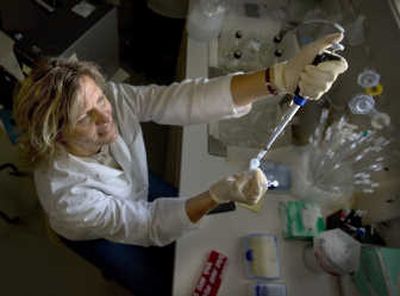
Dr. Karen Rudolph didn’t have much time: She had to see if DNA on the bloody knife matched the scattered hair found on a rock outcropping in the Idaho wilderness. Two days later, working in a state laboratory, she had an answer for investigators. The DNA was a match.
The suspect was arrested and charged – with poaching.
“Idaho poachers, until recently, were kind of your average Joe Bad Guy out in the woods doing small-fry things,” said Rudolph, a wildlife laboratory biologist for the Idaho Department of Fish and Game. “But now many of them literally hunt every day and night – looking for antlers to sell so some rich guy in Jackson Hole can have an antler chandelier, or ingredients to make some strange alternative medicine or to get a trophy for bragging rights.”
That means more high-stakes court cases, she said, with defendants hiring top-dollar attorneys and juries expecting high-tech evidence.
And that’s where Rudolph comes in.
As the state’s only wildlife DNA expert, the 44-year-old Horseshoe Bend resident handles evidence for many of Idaho’s poaching cases. Rudolph’s job requires her to determine the species, gender and identity of any given tissue, hair, bone chip or dried blood.
In many cases, her work has helped prosecutors win convictions and encouraged defendants to plead guilty without going to trial, officials said.
In one recent case, Gary Lehnherr, of McFarland, Wis., and Ronnie Gardner, of Jerome, Idaho, pleaded guilty in federal court to illegally killing a trophy mule deer in Lincoln County with a high-caliber center-fire rifle. Rudolph matched DNA in blood and hair found at the kill site – in an area where only muzzleloader hunting was allowed – with DNA from the deer’s antlers, found in Lehnherr’s home.
When the two are sentenced Oct. 15, they could get up to one year in prison and $100,000 fines for the federal misdemeanor. DNA also helped crack the case of a man who was suspected of trying to poison wolves in Wyoming and Idaho with pesticide-laced meatballs. No wolves were found dead, but the tainted meat was suspected in the deaths of more than 20 pet dogs.
The use of DNA evidence in wildlife investigations is new but increasing, said Assistant U.S. Attorney George Breitsameter, who prosecuted the mule deer case.
“I’m not sure if that’s because of people’s expectations, but DNA is the modern fingerprint that people can use to attach an individual to a crime,” he said.
Some suspects get a little cocky and unwittingly help investigators, Rudolph said.
“One guy had a folding knife that a warden thought had been used in a poaching case, and when the officer asked for it, the guy laughed and said, ‘Go ahead and take it. I’ve already cleaned it and boiled it and you won’t find anything.’ “
Back in the lab, Rudolph put aluminum foil down on the lab counter and opened the folding knife. As she ran a tiny brush over the hinge, the bristles dislodged a speck of dried blood. The sample was enough to run a DNA test and connect the knife to the poached animal, she said.