
Killing the message
It’s the holiday season, which means it’s time for another Hollywood blockbuster with a cast of talking animals, witches and an earnest child to point the way to truth and justice.
But those who applauded the Christian allegory in “The Chronicles of Narnia” or “The Lord of the Rings” now worry that “The Golden Compass,” the big-screen adaptation of Philip Pullman’s book that opens Friday, will poison children’s minds with atheism.
The Catholic League has produced a pamphlet, “The Golden Compass: Agenda Unmasked,” that attempts to debunk Pullman on 95 points; copies have been distributed to every Catholic bishop in the U.S.
“The movie is just bait for the books, which are worse,” William Donohue, head of the Catholic League, told USA Today.
“We don’t want unsuspecting Christian parents to take the kids to the film, buy the trilogy, and unknowingly introduce their children to the wonders of atheism and the damnation of Catholicism.”
“The Golden Compass,” the first installment in avowed atheist Pullman’s “His Dark Materials” trilogy, follows a young girl, Lyra, through a world dominated by a governing authority Pullman calls the Magisterium – the same name Catholics use to refer to their church’s teaching authority.
Though New Line Cinema has said they watered down the anti-religious themes in the movie, Plugged In, the entertainment-review sector of Focus on the Family, said there is still reason for concern.
“Even if they were (watered down), the theatrical celebration of Philip Pullman’s ‘His Dark Materials’ stories will likely introduce many more viewers to a worldview that’s wholly opposed to the gospel message of Jesus Christ,” a Plugged In statement said.
While British author Pullman has said his books “are about killing God,” he talks about the value of “the religious impulse” on his Web site.
However, he goes on to condemn organized religion that has “burned, hanged, tortured, maimed, robbed, violated and enslaved millions” in the name of God.
“That is the religion I hate,” Pullman writes, “and I’m happy to be known as its enemy.”
It’s the same type of religion Pullman sets up as the bad guy in “The Golden Compass.” The General Oblation Board of the Magisterium is responsible for kidnapping children and cutting away their souls, outwardly manifested as animals called daemons.
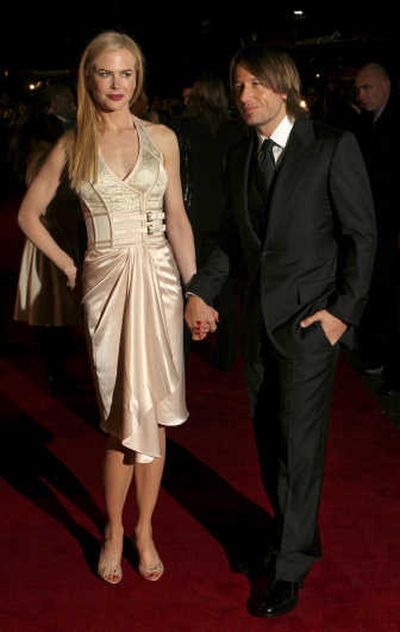
So is the film specifically anti-Catholic? Nicole Kidman, who was raised Catholic and plays the role of the sinister Mrs. Coulter, the head of the General Oblation Board, doesn’t think so.
“The Catholic Church is part of my essence,” she told Entertainment Weekly in an interview. “I wouldn’t be able to do this film if I thought it were at all anti-Catholic.”
Donna Freitas, professor of religion at Boston University, agrees. She says reading the trilogy “reinvigorated” her concepts of God, salvation and the soul.
“This trilogy is actually responsible for helping me stay Catholic,” she says.
Freitas, who recently co-authored “Killing the Imposter God: Philip Pullman’s Spiritual Imagination in His Dark Materials” with Jason King, interprets Pullman’s books quite differently than other Catholics. In her mind, it isn’t God who’s killed in the end, but an angel who has set himself up as a false god.
She doesn’t see Pullman’s books as dangerous for children, because “kids read things very differently” than adults.
Freitas recently had the chance to watch children ask Pullman about his series. Not a single kid asked why he killed God in his books, she said. Instead, they asked questions like, “Mr. Pullman, if you had a daemon, what would it be?”
Atheist groups have mixed feelings about the film. They say Hollywood should make more films that aren’t afraid to challenge religion, but also chide New Line for downplaying some atheist themes in “The Golden Compass.”
Ellen Johnson, president of the New Jersey-based American Atheists, thinks the religious community made a strategic error in coming out against Pullman’s books and the movie.
“Now people want to read what’s in there,” she said. “What’s the forbidden message, and why is it forbidden?”
For his part, Pullman seems equal parts puzzled, amused and saddened by the critics – especially the Catholic League’s Donohue.
“To regard it as this Donohue man has said – that I’m a militant atheist, and my intention is to convert people – how the hell does he know that?” Pullman asked in an interview with Newsweek.
“Why don’t we trust readers? Why don’t we trust filmgoers? Oh, it causes me to shake my head with sorrow that such nitwits could be loose in the world.”