
Meat Hunt

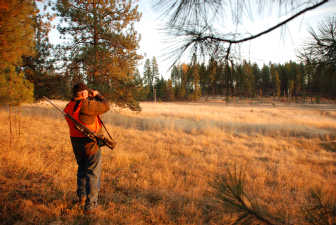
Even though meat from free-ranging animals is bringing premium prices at specialty markets nowadays, a few hunters are giving it away to the needy. A Spokane-area sportsmen’s group already has distributed more than 2,000 pounds of processed deer, elk and moose meat to seven food banks from Spokane to Colville this year, and some hunting seasons are still under way.
Since 1989, the Inland Empire Chapter of Safari Club International has been encouraging sportsmen to donate a portion of their high-protein, low-fat harvest to the needy.
Last year, the 180 SCI chapters nationwide collected and distributed 250,000 pounds of game meat, club officials say.
“All they have to do is bring their (skinned) animal to Crown Foods and tell them what portion they want to donate and we take care of the rest,” said Jim Burris, the club’s Sportsmen Against Hunter coordinator in Spokane. “We pay for the processing (of the charity portion), although a lot of hunters pay it themselves as part of the donation.”
Protein sources are in high demand at food banks, he said, noting that food bank operators “treat us like we walk on water when we bring in a truckload of meat.”
Burris felt the impact sportsmen can have on a personal level years ago when he met a young mother at a food bank as he was making a delivery.
When Burris told her what was in the boxes, the woman said she fondly remembered having game meat when she was little.
“I took her aside so she wouldn’t have to wait in line and I gave her a few packages and she started to cry,” he said. “I’ll never forget that.”
Giving game meat to charity isn’t as easy as writing a check. Even Rick Osterback, who has access to more than 400 acres of whitetail-infested foothills near Mount Spokane, had to devote many hours to the goal this fall.
“I like venison, so I don’t always give it away,” he said as he headed out for an early evening hunt this month. “But this year I decided to donate my buck.”
No buck presented a good shot during that hunt or the next one. “That’s OK,” he said. “I’m not in a hurry. I like to hunt.”
But a week later, a half an hour before sunset, Osterback connected with a three-pointer. He skinned the deer and drove it to Crown Foods, where the meat will be frozen until it can be processed.
“We bone and grind all the meat into 2-pound packages because it goes further and can be used in so many ways,” said Crown’s Scott Byers. “This has been a particularly good year,” he said, noting that 17 deer have been donated to the Sportsmen Against Hunter program from the state’s safety project to remove deer from the fenced airport enclosure at Deer Park.
“We also accept meat from hunters who are cleaning out their freezer to make room for the animal they harvested this year,” Byers said.
“A lot of this goes to needy people in rural communities,” he said. “They don’t have to see the price of farm-raised elk or venison to know this is a delicacy.”
More former hunters need to know about the Sportsmen Against Hunger program, Osterback said.
“There are a lot of hunters who have drifted away from the sport because it takes time and effort,” he said. “But I’ll bet a lot of them would get back into it if they knew they were doing somebody a favor,” he added, noting that Washington youth hunters, disabled hunters and hunters older than 65 can use over-the-counter deer tags to harvest a doe.
He wasn’t just talking about feeding the needy, either.
“When I want into town the other day, I passed five dead deer along the road. If we can get more hunters out to kill a deer, we can feed more hungry people and help prevent highway accidents at the same time.”