
Tensions high ahead of Venezuela voting
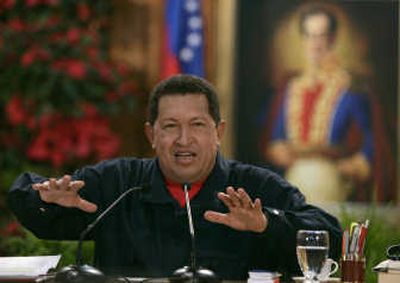
CARACAS, Venezuela – President Hugo Chavez faces his stiffest challenge in years today as voters decide whether to approve constitutional changes that would greatly expand his powers and let him seek re-election for decades to come.
An emboldened opposition and recent violent clashes in street protests point to a potentially volatile dispute if the vote is close.
Chavez has warned opponents he will not tolerate attempts to stir up violence, and he has threatened to cut off oil exports to the U.S. if Washington interferes. The South American country is a major supplier to the United States – the No. 1 buyer of Venezuelan oil.
“In the case of an aggression by the United States government, we wouldn’t send any more oil to that country,” Chavez told reporters Saturday. “Forget about our oil.”
Chavez, who has become Latin America’s most outspoken antagonist of Washington since he was first elected in 1998, calls the constitutional overhaul vital to making Venezuela a socialist state. He labels those who resist it pawns of President Bush.
“Anyone who votes ‘No’ is voting for George W. Bush,” Chavez shouted to a sea of supporters Friday. “Our true enemy is the U.S. empire, and on Sunday, Dec. 2, we’re going to give another knockout to Bush.”
While the Venezuelan government touts polls showing Chavez ahead, other surveys cited by the opposition indicate strong resistance – which would be a change for a leader who easily won re-election last year with 63 percent of the vote.
Pollster Luis Vicente Leon said tracking polls by his firm Datanalisis in the past week show the vote is too close to predict. Which side wins will depend largely on turnout among Chavez’s supporters and opponents, he said.
“If he wins by a very small margin, that’s a scenario filled with conflict,” Leon said.
Chavez has sought to capitalize on his personal popularity ahead of the vote. He is seen by many supporters as a champion of the poor who has redistributed more oil wealth than any other leader in memory.
Opponents – including Roman Catholic leaders, press freedom groups, human rights groups and prominent business leaders – fear the reforms would grant Chavez unchecked power and threaten basic rights.
The changes would extend presidential terms from six to seven years, create new forms of communal property, and let Chavez seek re-election in 2012 and beyond.
They would also grant Chavez direct control over the Central Bank, allow his government to detain citizens without charge during a state of emergency, and empower the president to redraw the country’s political map and handpick provincial and municipal leaders.
In Washington, State Department spokesman Sean McCormack said the United States hopes the referendum will be “a free and fair contest.”
The Venezuelan Embassy in Washington protested McCormack’s remarks, saying they “are aimed at generating doubts” ahead of the vote.