
Taking refuge
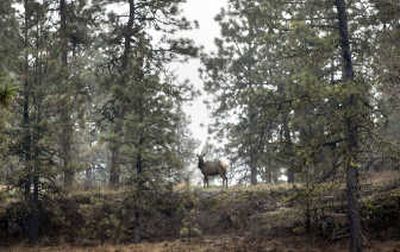
Elk that frequent Turnbull National Wildlife Refuge are the root of more conspiracy theories than the Kennedy assassinations.
Some hunters contend that state and federal wildlife officials try to keep elk on the refuge during the fall hunting seasons to prevent the animals from getting shot.
“Nothing could be further from the truth,” said Mike Rule, Turnbull wildlife biologist. “We’d love to see more elk harvested. In fact, we’re trying to get authorization for limited elk hunting inside the boundaries to help disperse them and break the herd’s pattern. The elk have learned to spend the hunting season on the refuge except to go out at night and depredate on private land.”
Hunting is prohibited within the refuge boundaries, although the proposed refuge management plan would allow a lottery drawing for a limited number of refuge elk permits.
Studies have shown that the growing number of elk harbored in the refuge have degraded aspen groves and other habitats are important to a wide range of wildlife.
A handful of hunters inside the refuge could take a few animals, but more important, they would keep the herd moving, reducing their impact on the refuge and making more of them available to hunters outside the refuge.
The proposal to allow elk hunting in Turnbull has been stalled by a lawsuit filed in 2003 against the U.S. Fish and Wildlife Service by the Fund for Animals. The group contends the agency did not adequately look into the cumulative impacts of hunting on 37 National Wildlife Refuge Systems across the nation.
“The case is still in litigation, preventing any new hunting opportunities on the refuges,” said Joan Jewett, the agency’s spokeswoman in Portland.
Meantime, Turnbull refuge staff, Washington Fish and Wildlife Department officials and local media often receive complaints that the government hires helicopters to herd elk onto the refuge in the fall.
Last week, hunters called The Spokesman-Review to complain that Turnbull employees were hauling hay into the refuge to lure elk away from muzzleloader hunters and concentrate the game in an isolated area for a Winter Festival elk-viewing tour scheduled for Dec. 8.
Today is the last day of the muzzleloader elk hunting season.
“We don’t have any hay on the refuge,” said Nancy Curry, refuge manager. “We are not feeding elk.”
The large truck the hunters saw going into the refuge was hauling rock to fill muddy areas in a service road, Rule said.
“Those hunters contacted Steve Fox, our maintenance worker who was driving the truck, when he came out of the refuge and he told them he had been hauling rock but they didn’t believe him,” Rule said.
The refuge staff and state wildlife officials also hear annual complaints that helicopters are used to herd elk onto the refuge.
“If anyone looked at our budgets, he’d know we don’t have the funding to scare wildlife,” said Kevin Robinette, WDFW regional wildlife manager in Spokane.
The state agency does an aerial survey of Turnbull-area elk almost every fall before the elk spread out to feed on agricultural lands during winter.
“They don’t want to interfere with hunting seasons, so they do the count before or between seasons,” Rule said.
In order to get most of the mature bulls in the open, the survey need to be conducted during the rut, said Howard Ferguson, WDFW district biologist.
The survey information is important to supporting the proposal to allow elk hunting inside the refuge boundaries, Robinette said.
Getting good surveys of the elk population will help biologists set the proper number of permits and monitor the elk in future years to make sure the elk aren’t overhunted or disturbed too much, he said.
In early October last year, the researchers counted 369 elk in Turnbull, including 39 bulls, 11 of them big mature bulls.
This year on Sept. 35-26, they counted 268 elk, including 11 mature bulls.