
Truly bizarre
If somebody dreamed up the script for “Charlie Wilson’s War” and plunked it down on a movie studio executive’s desk, they would be hooted out of Hollywood over its absurdity: A hard-drinking, compulsively womanizing congressman from Texas single-handedly puts a bunch of rag-tag tribal fighters in position to defeat one of the bloodiest and most well-oiled military machines in history.
But the improbable tale that reached theaters on Friday – starring Tom Hanks and directed by Oscar winner Mike Nichols (“The Graduate”) – happens to be true.
It’s based on the 2003 book by the late George Crile, a “60 Minutes” producer.
Yes, there really is a Charlie Wilson. He really did date beauty queens and go hot tubbing with Las Vegas showgirls. He really did drink himself to death – almost – while on the public payroll.
And he really did use his clout as a member of the House Appropriations Committee to underwrite an unorthodox war that ended with the Soviet Union’s vaunted Red Army making a humiliating retreat from Afghanistan in 1989.
“Our job is to capture human nature,” Hanks says. “And the fact is these people were funny, and they were hilarious, and they did things that were absolutely surreal.”
And yet, he adds: “It’s as serious as you could be.”
In many ways, Wilson’s secret enterprise was the feel-good war story of the 1980s: American victory, no American deaths.
“The evil empire collapsed without the spilled blood of a single American soldier,” says Wilson, 74.
But a cost was paid later.
With the American government unwilling to fund Afghanistan’s peace in the same way it funded the war, the radical Taliban militia filled the leadership void in the early 1990s and provided a haven for terrorists – becoming the incubator for the 9/11 attacks on the Pentagon and the World Trade Center.
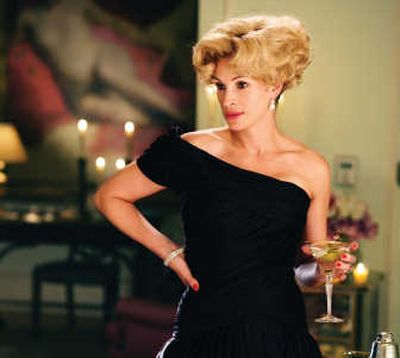
The movie wrestles with how much of that responsibility to lay on Wilson, his Texas socialite muse Joanne Herring (Julia Roberts in “Dynasty “mode) and CIA agent Gust Avrakotos (Philip Seymour Hoffman), who orchestrated the flow of money, weapons and unlikely international alliances.
The film tells Wilson’s story with such emphasis on the absurdities and farcical elements that it snagged five Golden Globe nominations, including best picture, in the comedy categories.
“It’s as if people don’t understand: ‘Why do you have so much humor in the movie? What’s the point of that?’ ” says Hanks, repeating questions he has been asked numerous times.
“It has to be categorized as one thing or the other. And that’s just boring. That’s just dull.”
The real Wilson doesn’t quibble with any of the movie’s scenes that show him partying hearty as he hijacks U.S. foreign policy out from under more cautious diplomats.
“Anything I might have objected to was provable,” the irrepressibly candid Democrat says from Houston, where he has spent the last several months recuperating from heart transplant surgery – the latest episode in the extreme sport that is his life.
Wilson has put his hard-living days behind him, avoiding booze and getting married. Though frail, he made it to the red carpet earlier this month for the movie’s Los Angeles premiere.
“I think they made me a little better than I am,” he says.
The movie hints at the sorry aftermath to Wilson’s efforts. The congressman cuts to the chase.
Asked whether any of his old Afghan beneficiaries are aware of the film or might join him at the premiere, Wilson pauses a long time before answering “no.”
They have fallen out of touch, he says: “The guys who took care of me back then are Taliban now.”
Nichols has chronicled the absurdities of war before, notably from the soldier’s perspective in his 1970 adaptation of Joseph Heller’s “Catch-22.”
In this case, he and Hanks agree they wanted to show the connections between the current world and the fate America shaped for itself in the late ‘80s. But they say it is unfair to lay too much 9/11 blame on Wilson and his compatriots.
“When you’re doing anything about something in the past, I think you have to be careful not to keep interpolating things that you know from looking back from the future,” Nichols says.
However, Herring, the evangelizing former beauty queen, has told gossip columnists she and Wilson balked at an early draft of the script by Aaron Sorkin (“The West Wing”) that emphasized the aftermath of the Afghan-Soviet conflict in terms of creating a breeding ground for al-Qaida.
She claimed they hired a lawyer to force changes to the movie that absolved them of that responsibility.
Hanks laughs when asked about Herring’s statements. He acknowledges the script was rewritten, but not at her direction.
“I think the film makes the point that it should have: These things happened, and then we (messed) up the end game,” Hanks says. “Then if you cut to the smoldering towers, that’s dishonest. It’s very simple-minded.”
Wilson says the problem wasn’t intervening in Afghanistan, but not staying after the Soviets retreated.
“We picked up our marbles and went home,” he says. “Our debt was so colossal and so obvious, and we walked away from it.”
Wilson says his conservative Texas constituents put up with his distinctly unconservative lifestyle because, “I provided them with exquisite service and world-class entertainment.”
Hanks sums him up this way: “He lived without an inch or ounce of hypocrisy. He never lied about his behavior.
“He would say, ‘There was white powder on red fingernails, but I don’t remember any of it going under my nose.’ “
“One of the reasons we love Charlie,” Nichols says, “is, by God, he does the one thing that you’re not supposed to do in politics: He tells the truth.”