
Bad to awful to worse in ‘07
For generations, the year 1919 has owned a special, ignominious place on the shelf of American sports history.
Now, it has company. 1919, meet 2007.
Black Sox, meet the Mitchell Report. And Barry Bonds. And Michael Vick. And Marion Jones. And Tim Donaghy. And Don Imus. And Michelle Wie.
Whew. It’s a withering list, to think of all the trouble and sadness 2007 has seen. The worst part of it, unfortunately, is that that’s not the entire list.
Let’s not forget Notre Dame football. And Tank Johnson and Pacman Jones. And the Beckham experiment. And the mess of the BCS. And the Greg Ryan-Hope Solo fiasco. And the Patriots’ spying escapades. And O.J. (again).
Seriously, could there be a worse year in sports, all the way around? The only thing missing was a players’ strike or a lockout.
Come to think of it, that might have helped matters in 2007.
Years ago, Charles Barkley declared in that famous Nike commercial that he was “not a role model.” Many of the athletes who have followed him, including most of the aforementioned, have taken the Barkley concept a step further: They now are the anti-role model.
It doesn’t take much of an imagination to envision the exasperation of today’s parent at a major league baseball game:
“Kids, see all those guys out there who make our refrigerator look small, the ones who refuse to look up when you call their names during batting practice? Don’t be like them.”
We must begin with the train wreck that was baseball in 2007. What image do we most want to remember about the rise and fall of the national pastime? Is it the joy in Beantown – sports fans, if you want happiness, definitely move to Boston – after what is now becoming commonplace, another Red Sox World Series victory?
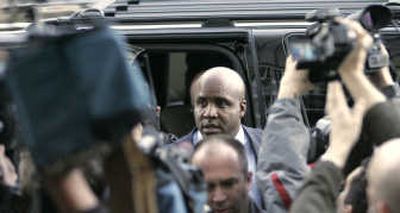
Or is it hapless Commissioner Bud Selig, that tortured look on his face as he watched from on-high, his hands in his jacket pockets so they couldn’t possibly meet in an act of spontaneous applause, watching another controversial Barry Bonds home run leave the park?
Today, we want to remember the good, the Red Sox. But tomorrow, history will embarrassingly judge Selig, his union sidekick Don Fehr and many of the rest of us by our collective and bizarre kid-glove treatment of Bonds – when we most definitely knew what he was up to. The rabid fans in San Francisco almost deserve a pass compared to the baseball pundits we read in the paper and see on TV who ignored the obvious in their rush to idolize a number – Bonds stands at 762 – that most likely will end up being treated like the East German swimming and track and field records of the 1970s and 1980s, as the stuff of scientific make-believe.
As each day goes by, as more information comes out, as more tell-all books will be written, Bonds and former heroes like Roger Clemens and Andy Pettitte will look worse, not better, almost ensuring that they will join their forward-looking pal Mark McGwire in baseball’s new Hall of Shame. No one has suggested a site for that yet; is anyone using the old BALCO building out in northern California? (Bonds and Clemens have denied all allegations, of course.)
Speaking of BALCO, which gave us not only Bonds but the fallen sprinter Marion Jones, it is a fitting coda to the year to find out that Jones, while admitting she lied to federal investigators about her use of performance-enhancing drugs, actually lied some more. Documents show her use of drugs to be more widespread and calculated than she claimed in October. So even when some athletes come clean, they still cheat. That’s 2007 for you.
One can only hope that Jones in her disgrace, and NFL star Michael Vick in his, can eventually turn themselves around and use their considerable talents to be that anti-role model we’ve come to know – to tell children, especially, to not do what they did.
Cheating was not restricted to athletes, of course. Vick’s former employer, the NFL, saw its most powerful new genius, Bill Belichick, caught red-handed stealing the defensive signals of the New York Jets. He didn’t even try to deny it. Belichick was fined $500,000, but it hardly seemed to matter to him, or his stacked roster, as New England rolled through the NFL season with victory after victory. Just like with the baseball players, though, the Patriots opened the door to doubt, and some of us certainly will walk through it.
Tragic losses
Sadly, the same year our current coaching genius was exposed as a cheater, the NFL lost the first man the media labeled a genius – the classy Bill Walsh.
There were some spectacularly sad sports deaths in 2007, led by the loss of Washington Redskins safety Sean Taylor last month. That such a powerful, 24-year-old athlete would die after being shot in the upper leg in the middle of the night in his bedroom was stunning enough, but what his death represents could be even worse. That’s the precariousness of today’s athlete: the young men, imbued with wealth and fame, who have suddenly become targets.
Sports, still occasionally a sanctuary from reality, gave us no such refuge this year. Even something as simple as a college team’s bus trip to Florida turned tragic when the vehicle carrying the Bluffton (Ohio) University baseball team crashed through an overpass in March, killing five players as they slept. The father of David Betts, one of the young men who died, has turned his grief into a quest for national legislation to place seat belts on long-haul bus rides.
A bigger university, Virginia Tech, dealt with its own tragic sadness; while no athletes were killed in the shooting rampage that left 32 dead, Virginia Tech’s teams played with a new, far-reaching fan base, and the school colors of maroon and orange could be seen on caps and shirts at almost any sporting event around the nation.
The names of those who died include Al Oerter, one of only two track and field legends to win the same Olympic event four times in a row (Oerter’s was the discus from 1956-68; Carl Lewis won the long jump from 1984-96); the great horse Barbaro and the outrageous stuntman Evel Knievel. After all his crazy acts, Knievel took his last breath not in flight, but in bed.
Still waiting
Sometimes great leaps are metaphoric, not literal – whether they work, or are a work in progress. So it appears to be for golf’s Michelle Wie and soccer’s David Beckham. Wie, now 18, suffered injuries to both her wrists, made only three cuts in nine starts, withdrew twice and broke par only twice. Her swing coach David Leadbetter called the season a “debacle.”
That would be far too harsh a term for Beckham’s debut in U.S. soccer. Ho-hum might be more like it. While the TV ratings for Beckham’s games with the L.A. Galaxy initially were far better than the usual ratings for men’s professional soccer, they were far below U.S. major-league sports standards. The fact that Beckham seemed to be warming up his injured body along the sideline more than actually playing on the field, er, pitch, probably turned off the majority of American sports fans, who have this bizarre notion that they actually like to see a little action while watching sports on TV.
There certainly were pockets of happiness to be found in sports in 2007. Sweeps were the order of the day in the World Series, and also in the NBA finals, where young LeBron James’ coronation had to wait as the San Antonio Spurs won their third championship in five years.
Roger Federer won three more Grand Slam tennis titles, including his men’s record-tying fifth straight Wimbledon and fourth consecutive U.S. Open. His pal Tiger Woods won his ninth PGA Tour Player of the Year honor after winning seven tournaments, including the PGA Championship (his 13th major) and the inaugural FedEx Cup playoff, which Phil Mickelson might still be whining about.
Strong victors
Winning was contagious for Jimmie Johnson, too. The NASCAR star came from behind to win his second consecutive Nextel Cup Chase for the Championship. And Pat Summitt and her Tennessee women’s basketball team won again, beating Rutgers for her seventh national title. That runner-up finish was only the second-biggest development of the year for the Scarlet Knights, for a week later, they were dragged into a racial and gender-based national morality play, thanks to a few choice words from shock jock Don Imus.
Perhaps the happiest moment of the year in sports occurred far off the field, in physical rehabilitation in upstate New York. That’s where Buffalo Bills tight end Kevin Everett, apparently paralyzed during a game Sept. 9, began moving his arms and legs again. Talk about your wonderful sports upsets.
Certainly there was joy in Gainesville, where the Florida men’s basketball team won its second consecutive NCAA championship by beating Ohio State – and its football team took advantage of the long layoff of Ohio State (yes, them again) to outclass the Buckeyes and win the mythical BCS national title.
We say mythical because, really now, how can anyone make sense out of the BCS, especially after what happened during the just-completed regular season? Where to begin? With the fact that Notre Dame started 1-9, and was thrilled to finish 3-9, with season-ending victories over those traditional football powerhouses Duke and Stanford.
Bet you never thought you’d read this sentence in your lifetime: The Kansas-Missouri game was crucial in deciding who would play for the BCS title.
What else? Boise State becoming the darlings of the 2006-2007 bowl season? Appalachian State beating Michigan in Ann Arbor? Hawaii football becoming a new national powerhouse? Stanford defeating USC in Los Angeles?
All this in one year? That’s 2007 for you.