
Clothing features built-in tourniquets
RICHMOND, Va. – As an Army surgeon in the Middle East, Dr. Keith Rose watched a colleague bleed to death when a truck in his convoy was hit with a rocket-propelled grenade.
Rose could not get his comrade a tourniquet, which could have helped control the bleeding on his wounded leg, and sat along the mangled wreckage and talked with him as he took his last breath.
“It really kind of frustrated me,” Rose said.
Once he returned to the U.S., Rose approached BlackHawk, a provider of military and law enforcement gear, with an idea to create clothes with built-in tourniquets.
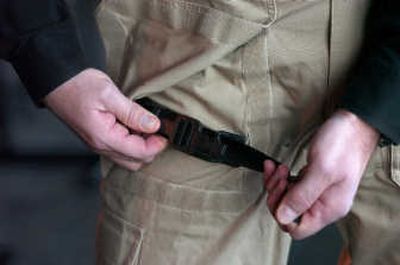
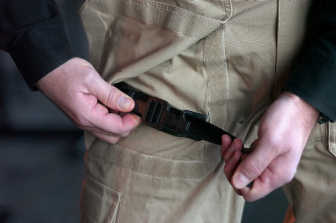
The system being tested for use in military uniforms, called Warrior Wear, has eight tourniquets – two in each sleeve and pant leg.
Tourniquets fashioned from straps that look like those on backpacks are sewn into the clothing, and the straps are concealed beneath a fabric fastener.
“No matter how good the tourniquet is, if you can’t get it on the person at the right time, it doesn’t work,” said Rose, who does tactical medicine consultation and medical work overseas.
The Norfolk-based company said the clothing should be available for retail around the end of March. It is expected to retail for less than $200, but the cost to the military would depend on factors such as volume.
Military officials agree having readily accessible tourniquets is important.
“Tourniquets have allowed many people with devastating injuries to come back that in another time and another place would have died,” said Col. Patricia R. Hastings, director of the Army’s Department of Combat Medic Training, based at Fort Sam Houston in Texas.
“If you can save a medic a few minutes of time so he can concentrate on saving your life … it has great possibilities,” Hastings said.