
Back to the Fox

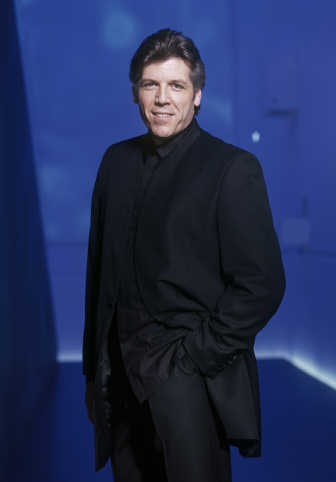
Thomas Hampson began his career on the stage of the Fox Theater.
Well … sort of.
The baritone was, as a teenager, singing in the Spokane Chorale for visiting appearances by the Seattle Opera with the Spokane Symphony. A post-performance adventure led to his missing one of those dates.
“I had a Jeep and needed to let off some steam after the matinee,” Hampson recalls. “So I took it out in the country somewhere and promptly got stuck in deep mud.
“A kind farmer pulled me out, but by the time I got the mud off, I called to say I’d miss the evening performance. Sister Marietta was fit to be tied.”
Sister Marietta Coyle was Hampson’s voice teacher and the director of the chorale.
His career since then has been no stick-in-the-mud affair. Hampson is one of the world’s most sought-after opera stars; one of the most frequently recorded singers, opera or otherwise; and a musical personality whose projects are the awe of critics and envy of academic musicologists.
Hampson returns Saturday to sing a “Home for the Holidays” benefit concert for the newly restored Martin Woldson Theater at The Fox. He will be accompanied by pianist Craig Rutenberg, one of his frequent collaborators.
Saturday’s program begins with classic German songs by Schubert and Liszt, an aria by Wagner, then on to art songs by American composers.
“I’ve left the numbers after intermission unspecified,” Hampson said in a telephone interview from Vienna.
“There will be some Christmas stuff and some of my favorites – a kind of hum-yourself-out-of-the-hall selection of songs from the lighter side.”
Hampson has the song literature covered, and opera, too.
He has performed opera from Monteverdi in the 17th century to still-wet-on-the-page works by Friedrich Cerha and Conrad Susa. And the songs he has sung and recorded range even further.
“Songs are the mirror of any culture,” Hampson says. “I have especially wanted to uncover the tracks in the sand in the songs that make up America’s diary all the way from Francis Hopkinson, a composer who signed the Declaration of Independence, to Stephen Foster and Cole Porter and Irving Berlin and composers who are not so famous.”
Saturday’s recital will also include works by Henry T. Burleigh, an African American student and friend of Dvorak, and Elinor Remick Warren, a once well-known composer whose works Hampson has been instrumental in reviving.
Though those in Spokane may think of Hampson as a native son, he actually was born in Elkhart, Ind.
“But I grew up in the Tri-Cities and Eastern Washington,” he says. “My family didn’t include any professional musicians. We sang, mostly church music, my sister played the piano and I came up though the Seventh-day Adventist schools, where music is important.
“Certainly my first experience with classical symphonic music was hearing (conductor) Don Thulean’s performances with the Spokane Symphony in the Fox from the time I was 14 years old.”
Hampson studied voice at Fort Wright College of the Holy Names and political science at Eastern Washington University.
Sister Coyle recognized his potential and pushed him toward a career in music. Coyle had been a student of Lotte Lehmann, one of the great singers from the 1920s to the ‘40s.
When Hampson’s performances of Mahler songs with conductor Leonard Bernstein first appeared in the late 1980s, the young American baritone was declared an “overnight sensation.”
Hampson laughs at the concept.
“Everybody knows that careers are built block by block,” he says, “but sometimes you are working 24-7 and the blocks are coming really fast. That’s what happened to me in the mid-1980s.”
He started his string of successes as winner of the 1981 Metropolitan Opera Auditions, which led to his selection as a member of Dusseldorf’s Deutsche Oper am Rhein.
“In 1984, I joined the Zurich Opera and had a chance to work with productions conducted by Nikolaus Harnoncourt and directed by Jean-Pierre Ponnelle,” Hampson says. “They led me to some great opportunities.”
Ponnelle introduced Hampson to Metropolitan Opera music director James Levine at the Salzburg Festival. After the audition, Levine planned to introduce him in the comparatively minor role of Schaunard in the opera’s 1988 production of “La Boheme.”
But Hampson’s debut role at The Met was of a higher order of magnitude.
“Renato Bruson, who had been scheduled to sing the Count in ‘The Marriage of Figaro’ at The Met in 1986, withdrew from the production,” Hampson explains. “On the basis of my audition with Jimmy, he asked me do the Count instead.”
While singing at The Met, Hampson was invited to audition for Leonard Bernstein, who was seeking an American baritone to sing Marcello in his recording of “La Boheme.”
“It was scheduled to be a 15-minute fly-by that turned into an hour-and-a-half session singing Puccini, Mozart and lots of Mahler,” Hampson says.
He was cast in Bernstein’s “La Boheme.” But more significantly, he began recording a series of great Mahler cycles that introduced Hampson to many listeners as that “overnight sensation.”
Hampson admits to a “passionate curiosity” about the fusion of poetry and music that characterizes the work of Mahler, Schumann and other song composers.
One of the recent projects Hampson is proudest of is his his advocacy of American songs included in the widely broadcast public television program “I Hear America Singing,” and his current collaboration with the Library of Congress’ “Song of America” series.
“In the 2009-10 season, I hope to be able to sing recitals of American songs in every state in the Union,” he says.
“Our songs say for us what has been on our minds since our country began, some of our deepest thoughts and some of the most playful. We need to hear those thoughts and keep them with us.”