
Director wants more troopers

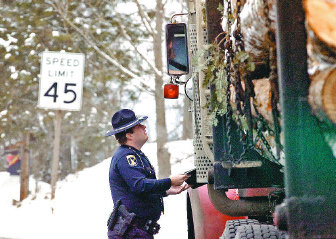
BOISE – The Idaho State Police only has 30-some cops on the road at any time – less than one per county.
That’s clearly not enough, the new ISP director told legislative budget writers on Wednesday. But at this point, Gov. Butch Otter isn’t recommending any new positions at ISP – nor is he recommending many new positions in any of the state’s public safety agencies. Instead, reported his budget analyst, David Hahn, he’s asking all agency directors to look internally or contract out to fill their needs, rather than add more state employees.
“I think that’s his philosophy, that you don’t grow government,” said Rep. Margaret Henbest, D-Boise. “But on the other hand, we’ve been caught in this cycle of pay now, pay later – and the pay later is a lot more expensive.”
Henbest objected to the lack of funding in Otter’s budget proposal for six new trooper positions requested at the ISP’s Alcohol Beverage Enforcement bureau, saying the state needs to enforce laws against underage drinking to help head off more serious crime down the road.
Other members of the Joint Finance-Appropriations Committee expressed concern about other unfunded positions in public safety agencies. Sen. Shawn Keough, R-Sandpoint, was particularly concerned that the governor’s budget declined to fund two new ISP positions to help carry out a law passed last year requiring more intensive monitoring of sex offenders.
The two new positions would require spending just another $27,900 to upgrade current assignments into two full-time office specialists, and the money wouldn’t even come from the state’s tax coffers; it would come from fees paid by registered sex offenders.
Hahn said, “The direction was that FTPs (new full-time positions) would be few and far between.”
ISP’s new director, Col. Jerry Russell, has only been on the job 13 days.
Hahn told lawmakers, “The message to Col. Russell was to look at what we can do internally.”
Keough responded, “This agency in particular has struggled with needing more manpower out on the roads … and I really question that decision.”
Senate Finance Chairman Dean Cameron, R-Rupert, admonished Hahn, saying, “There are just certain things that you set aside and try to do what’s right, and certainly protecting the public ought to be one of those items; following state law ought to be one of those priorities.”
Cameron also questioned why the administration budget provided no money for increased gas costs for state troopers’ cars; Hahn said the agency could take that money from its personnel budget.
Cameron said that’s exactly the kind of approach over the years that’s left the ISP short-handed on troopers on the road, though lawmakers have tried to provide funding to increase those numbers.
“It’s a huge problem,” he said. “You can’t have a trooper and a vehicle and then not be able to put the gas in it.”
Russell said as a new director, he wants to conduct a full review of how the state police are using resources and personnel, with an eye to getting more troopers on Idaho roads. Right now, he said, there are 36 troopers on the roads on any given weekday, with the number falling to 30 after 6 p.m.
“That’s less than one trooper per county, one trooper for about every 900 highway miles, one trooper for every 43,000 Idaho citizens,” Russell told lawmakers.
“It is my intent to address that critical issue as soon as possible,” he said.
Both Cameron and Keough said they didn’t blame Otter for leaving the items out of his budget but were concerned that his budget staffers, who handle the details, left out such key items.
“On some of the safety issues, I think we will step up to the plate and fund it, and I’d be surprised if he vetoes it,” Cameron said.
Keough said she has worked on the ISP budget over the years, and “they’re not staff-heavy.”
“I agree with the governor’s philosophy that we want to be cautious in growing government,” she said. “But I also think once he’s given an opportunity to look a little closer at enforcement needs, he might be willing to support additional personnel.”
She added, “Citizens expect when they get in trouble, that ISP is going to be there to help.”