
Petraeus takes charge in Iraq
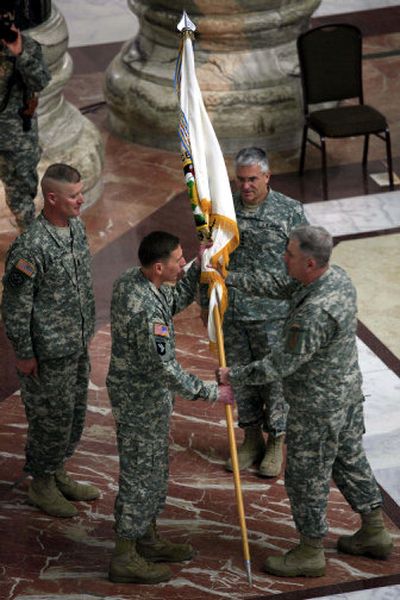

BAGHDAD, Iraq – Army Gen. David Petraeus took control of U.S. forces in Iraq on Saturday with a grim assessment of the situation he is inheriting from the outgoing commander, Gen. George W. Casey Jr., who predicted that Iraqi troops would be in charge of the country’s security by fall.
In a brief ceremony beneath a massive chandelier in the marble and mosaic rotunda of one of Saddam Hussein’s former palaces, the two leaders’ contrasting styles stood out.
Petraeus warned that Iraq was doomed if U.S. and Iraqi troops did not bring sectarian violence under control, while Casey suggested that American forces had done plenty of heavy lifting and that it was up to Iraqis to take over.
Casey, the newly confirmed Army chief of staff, whose 2 1/2-year tenure in Iraq coincided with a sharp rise in sectarian violence and insurgent attacks on coalition forces, hands off to Petraeus at a crucial point in the four-year conflict. A new U.S.-Iraqi plan to step up security in Baghdad, the capital, and Al Anbar province has begun, and leaders from both countries are banking on it having enough influence on violence to quell skepticism over their handling of the war.
Petraeus, who called the Iraqi situation “dire” during his confirmation hearings last month, was equally blunt Saturday and offered only guarded optimism. Saying the mission is “doable,” he also called it “exceedingly challenging” and warned that failure was not an option if Iraq was to survive intact.
“The prospects for success are good. Failing that, Iraq will be doomed to continuing violence and civil strife,” said Petraeus, whose development of the Army’s just-released manual on fighting counterinsurgencies will heighten scrutiny of his performance here.
Casey would not acknowledge any second thoughts about his tactics and, in comments before the ceremony, said he was leaving Iraq “with a great feeling of pride, because I really feel we’ve laid the foundation for Iraq’s success.”