
Five new solutions for cold and drafty rooms
New government, industry and utility company research finds there are now economical permanent solutions. Here are some common causes, and solutions:
•Identify Your Duct Leaks and Have Them Sealed: The Department Of Energy states that the typical duct system loses an astounding 25 to 40 percent of the energy put out by the central furnace, heat pump or air conditioner.
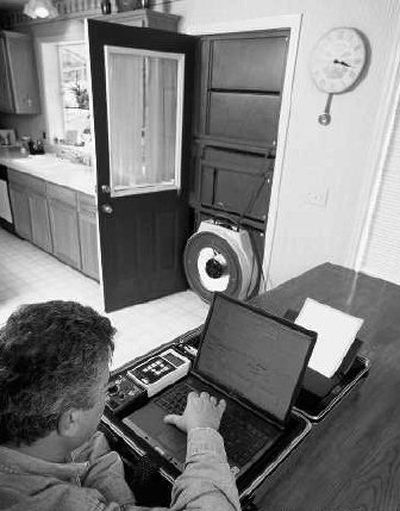
•To determine if your duct system leaks, and how badly, ask your HVAC contractor for an Infiltrometer blower door test. This is a new computerized diagnostic instrument, invented by the Department Of Energy. The test, which pinpoints precise locations of leaks and drafts, typically takes an hour to perform. Many heating and air conditioning contractors offer the test as part of a “Whole House Health and Comfort Checkup” that also checks insulation levels and overall duct system performance.
•If your ducts are leaking, have them thoroughly sealed, using special paint-on fiber-reinforced elastomeric sealants, not duct tape. Simply sealing duct leaks usually makes a dramatic improvement in evening out temperatures — and pays for itself through lower utility bills.
•Have Your Duct System Tested and Air Balanced: Ask your HVAC contractor to check the “static pressure” in your ducts to make sure it’s not too high. Renovations to the duct system may be needed to add balancing dampers and eliminate restrictions.
•Correct Missing Insulation and Thermal Bypasses: Proper air flow is only part of the challenge. Missing insulation or not enough insulation is very common, especially in rooms adjacent to attics, or over garages. Ask if your contractor can perform an “infra-red camera scan” as part of a Whole House Checkup.
•He should inspect insulation levels and also check for Thermal Bypasses (hollow wall cavities in the home behind sheet rock walls). Sealing these areas saves energy and makes individual rooms much more comfortable.
•Consider a Zoning Damper System: After implementing the above recommendations, if the temperatures are still not even enough, ask your contractor for a proposal for a zoning system. Motorized dampers are installed in the ducts, tied to thermostats in all areas. If one area needs more cooling or heating, the dampers to it stay open and others close off.
•Consider a New SMALLER Furnace or Air Conditioner: If your current system is oversized, it comes on, runs for only a short period and then shuts off. The blast of heating or cooling from an oversized unit typically satisfies the thermostat before the farthest reaches of the home are heated or cooled.
A new properly sized unit runs gently for longer periods, resulting in more even temperatures, much greater summertime humidity removal, and lower utility bills. Although a new unit is a big investment, done properly the comfort levels will greatly improve, and lower utility bills will pay for it over time.