
Moment of Zen

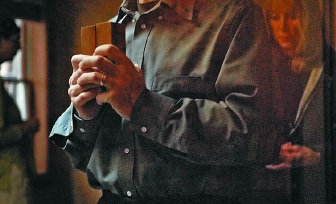
They sit in silence.
Eyes closed, legs crossed, hands folded into a cosmic mudra, the people gathered in this dimly-lit room breathe deeply as they sit upon cushions on the floor.
For 25 minutes at a time, three times in a 1 1/2 hour period, they remain in this intense stillness – quieting their minds as they focus on the inhalation and exhalation of each breath.
This is zazen, the discipline of freeing the mind from all thoughts while sitting in meditation.
Every Saturday, Zen practitioners from throughout the area meet in the meditation room of Spokane’s Community Building to reflect together by chanting, sitting in silence and walking slowly in a circle.
Known as the Zen Center of Spokane, this group of about two dozen men and women are among several in the region that have made meditation and mindfulness a core part of their spiritual lives.
“It’s about being aware of the now,” said Kristina Rood, one of the organizers of the Zen Center. “Not rushing to the future. Not clinging to the past. But being here, being present.”
Zen is one of the major branches of Mahayana Buddhism, but you don’t have to be Buddhist to practice Zen, according to members of the Zen Center. Some of the people who regularly meditate on Saturdays also go to church on Sundays. While many have discovered a connection with Buddhism, a few still identify themselves as Roman Catholic, Lutheran, Jewish or a member of a particular faith group.
Regardless of their religious upbringing, those who come to meditate with the Zen Center describe Zen as a spiritual path and a way of being in the world.
The practice began in China in the 6th Century as a merging of Indian Buddhism with Taoism and Confucianism. Meditation was emphasized over scripture as the shortest way of reaching the enlightened mind, which the Buddha believed to be inherent in everyone.
The first Zen teachers came to this country around the turn of the century, but their teachings didn’t gain widespread popularity until after World War II. These days, “Zen” can be heard and found everywhere, from book titles such as “Zen and the Art of Cooking Beer-Can Chicken” to baby names and even as a catch phrase on Jon Stewart’s “Daily Show” (“Here it is, your moment of Zen”).
Those who meditate regularly with the Zen Center, however, understand Zen as a process, even a verb. For them, it is the act of paying attention to what’s right in front of you and living a compassionate life.
“It has taught me more of who I am and who others are,” says John Martin of Spokane, a Zen practitioner for more than three decades. “It has taught me how to be in this world in a way that is balanced, with integrity, with love of others and with a sense of meaning.”
The gathering
Each time they enter and leave the meditation room, members of the Zen Center bow as a sign of respect and gratitude.
They bow to a small ceramic statue of Quan Yin, the bodhisattva of compassion, placed upon a simple altar adorned only with a candle and two incense sticks. They bow to each other. Before sitting in zazen, they bow toward the spot in the room where they are about to meditate.
“All the evil karma, ever created by me since of old,” they later intone together after the metallic clang of a small gong signals the beginning of chanting. “On account of my beginningless greed, anger and ignorance. Born of my conduct, speech and thought, I now confess openly and fully.”
After a few more bows, they begin zazen, three 25-minute sessions separated by two brief periods of a walking meditation known as kinhin.
Although they don’t say a word, it’s not exactly quiet in the meditation room – a space with glass doors, a skylight on the ceiling and three windows facing a brick building.
A door slams. Stomachs gurgle. Laughter and loud voices emanate from a second-floor room.
Yet the Zen practitioners remain still despite the distractions outside.
“It doesn’t matter if it’s quiet or not,” Martin says later after the group exits the meditation room. “It’s all grist for the mill.”
The meditation session includes ancient rituals such as prostrations before the altar and the use of a bell and wooden clappers as a way to keep people focused during zazen.
Raised in a non-denominational Christian church, Dan Bergquist found the chanting and rituals strange at first, but in the silence of zazen, he somehow found solace.
“I was praying one day and I ran out of words,” says Bergquist, describing his introduction to Zen meditation about four months ago. Something powerful happens each time he sits in meditation, he says. “I have this overall increased peacefulness in my life,” says Bergquist, 28. “There’s also this sense of joy.”
Marty Yacker, 61, first tried meditating when he was in his 20s, but it was impossible for him to sit still, he recalls. He was in his 40s by the time he was able to meditate. “There’s something better about my life because I sit here,” he says.
Zen meditation has many benefits beyond spiritual enlightenment, according to Rood and others from the Zen Center of Spokane. Numerous studies show that the practice not only clears the mind and opens the heart, but also reduces stress, improves concentration and promotes a healthier, higher quality of life.
Even law schools, including Harvard, Yale and Stanford, are teaching the next generation of attorneys that the practice of meditation can bring about personal insight, which balances the adversarial nature of law, according to the Associated Press.
One of the founding members of the Zen Center of Spokane is Jim Sheehan, a local activist, philanthropist and former public defender.
“Meditation is not passivity,” says Sheehan. “The source of activism should be comtemplative.”
That’s one of the reasons why the third-floor meditation room is an integral part of the Community Building, a place that’s become the home of nonprofit organizations working for justice, explains Sheehan, the building’s owner. In order to make a difference in the world, he says, you have to go inward.
“The source is ourselves,” he says, “and to get to ourselves, we have to be quiet.”
Keeping the peace
Outside the calm of the Community Building meditation room, members of the Zen Center try to maintain that sense of peace and centeredness.
It isn’t always easy, they say, but the regular practice as a group serves as a reminder.
Martin, 61 and a social worker, recalls a recent incident in which he was able to apply the lessons of meditation: He was in his car one day and in a hurry to get to an appointment. Out of nowhere, a guy cuts him off in traffic.
His initial reaction was to get angry and yell at the driver, he says. But after 10 seconds, he became more conscious of his actions. “What am I doing?” he asked himself. Instead of saying “damn you” or some other profanity, he looked at the car ahead said out loud, “Bless you, brother.”
He kept repeating the words.
Maybe the driver had an emergency, he told himself. Maybe he didn’t mean to drive so erratically.
“I was able to dissipate my rage and replace it with harmony,” Martin recalls. “…It’s a gift to know that such a practice and goal exists.”