
Lessons of the past
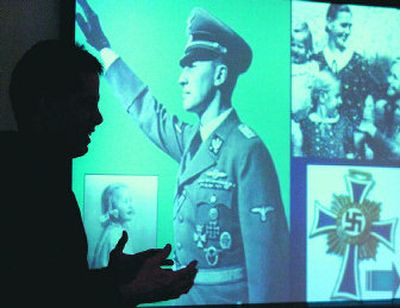
These are lessons in both hatred and hope, prejudice and the power of even just one voice.
The lessons go beyond Julie Scott’s East Valley Middle School classroom and into the hallways at school, the bus stop or any place where students are sometimes forced to contemplate their moral responsibility in combating bias and hate.
Scott – one of the few teachers in Eastern Washington who has been professionally trained to teach about the Holocaust – provides more than just the historical details of the genocide that took place in Nazi Germany; she also applies the lessons to current events and to the everyday lives of her students.
“To save one life is to save the world,” the language arts teacher tells her students, repeating a verse from the Jewish Talmud. “One person can make a difference if they stand up and speak out when they see something wrong.”
Young people, and even adults, sometimes fail to make the connection between history and the moral choices that confront them today. That’s why Scott and others in the community have made it their life’s work to not only teach students about one of the darkest moments in human history, but to use that lesson to promote respect, civic responsibility and social action.
“Studying the history of the Holocaust can help you understand the effects of prejudice, racism and stereotyping in any society while raising questions of fairness, justice, individual identity, peer pressure, conformity, indifference and obedience,” according to the United States Holocaust Memorial Museum.
Temple Beth Shalom is sponsoring an essay contest asking high school students in Eastern Washington to reflect on the meaning of “Never Again” – the vow of Holocaust survivors. Despite the oath, genocide and other crimes against humanity have continued to happen in places like Bosnia, Rwanda and now Darfur, according to the organizers of the contest, which is part of this year’s community observance of Holocaust Remembrance Day.
“How do we change that?” asked Mary Noble, the daughter of Holocaust survivors and a member of Temple Beth Shalom. “We wanted to turn to the youth and ask them how they can make our world a better place.”
When Scott begins her three-week unit on the Holocaust at East Valley, she emphasizes the “power of one” and begins the lesson with the famous Martin Niemoller quote: “First they came for the communists, and I did not speak out – because I was not a communist … Then they came for the trade unionists … the Jews … Then they came for me – and there was no one left to speak out for me.”
“All year, we talk a lot about not being a bystander and to stand up for people who are being picked on,” said Scott, who has received fellowships from numerous organizations including the U.S. Holocaust Memorial Museum and the Jewish Foundation for the Righteous. “We also start out the school year knowing it’s not OK to pick on somebody because they’re different.”
Since she developed the Holocaust curriculum at East Valley Middle School, teachers and staff have noticed a difference in the school’s atmosphere and culture. In fact, there have been several instances when eighth-graders at the school have prevented bullying and harassment incidents from happening in the school bus and hallways, according to Scott.
“The Holocaust isn’t just something that happened over 50 years ago – genocide is happening all over the world today,” said Steve Bernard, who teaches a semester-long class on the Holocaust at Central Valley High School.
Many in Bernard’s Holocaust class said the course has opened their eyes and given them a greater understanding of the effects of racism and discrimination.
They also say that it has made them more conscious of the plight of others around the world. Russell Miller, a 17-year-old senior, said the class not only made him more aware of discrimination, but it motivated him to help raise money for victims in Darfur.
Others said the course has also encouraged them to be more perceptive of the way people treat each other on a day-to-day basis.
“It makes you think about what you say and do to other people,” 17-year-old Steven Brown said after a class discussion on the roots of anti-Semitism, Hitler’s “Mein Kampf” and Nazi propaganda. “It’s weird how one person (Hitler) got so much power to do such hateful things … and nobody did anything.”
During the class, Bernard showed photographs and posters that the Nazis used to perpetuate stereotypes and make the Jews, the minority group, a scapegoat. “The German people elected and voted Hitler into power,” said Bernard, another Holocaust Museum fellow who has been teaching the subject for the last 20 years. “How can a highly intellectual society do that? … How much of a controlled society was Germany under Hitler?”
Before taking the Holocaust class, some students said they just didn’t know much about the atrocities committed to millions of Jews and other victims of the Nazis. Until they saw the powerful yet painful images of the Holocaust, their understanding was limited to statistics about a horrible occurrence that happened on another continent many years ago.
Like Bernard, Scott also tries to make the lessons more personal by using photographs, introducing the youth to Holocaust survivors, reading diary entries and memoirs from people who made it out alive.
“We want them to see these people not just as victims, but as people just like them – teenagers who listen to music, who hang out together,” said Scott. “We want them to see the connections. It isn’t just 6 million, but 6 million moms and dads, best friends, brothers and sisters. People just like them.”
Both Scott and Bernard felt compelled to make the Holocaust the focal point of their teaching careers after visiting the Nazi concentration camps and learning first-hand from survivors about the atrocities.
“It was overwhelming,” said Scott, recalling her experience in 1998 when she was awarded a fellowship to Poland and Israel to study the Holocaust. “I felt such profound sadness and anger that I didn’t learn about this at all in school.”
So she has made it her mission to teach the current generation, as well as other teachers, so that no one forgets what happened in Nazi Germany. “It’s more than teaching the history of it,” she said. “It’s about how we treat our fellow human beings and how to stick up for people who are being stereotyped and persecuted.”
A sign on Bernard’s wall helps explain his motivation: “Those who ignore history are condemned to repeat the past.”