
Early detection key to your pet’s thyroid treatment
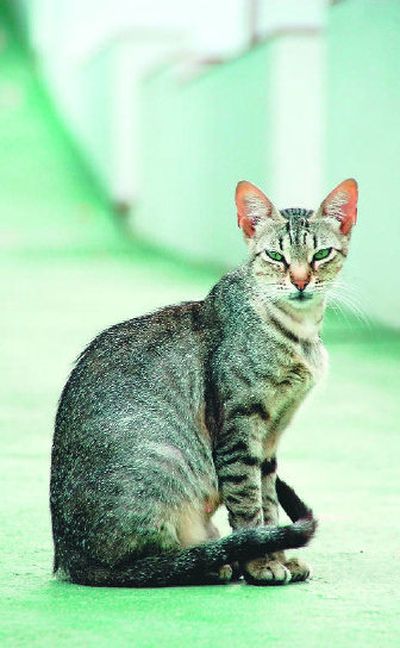
One of the most common diseases in older felines is an overactive thyroid gland.
Cats with hyperthyroidism almost always have a benign nodule (adenoma) in their thyroid gland. This nodule produces excessive amounts of thyroid hormone and doesn’t respond to the body’s normal attempts to decrease this production.
Thyroid hormone is one of the most important chemicals produced in the body because it controls metabolism. Absolutely every organ and tissue in the body is affected by thyroid hormone, so having too much (or too little) can have serious consequences.
Excessive thyroid hormone speeds up the normal things that occur in the body. Hyperthyroidism increases heart rate, leads to high blood pressure and damages the heart. Your vet might detect an abnormally high heart rate, often well in excess of 200 beats per minute, during your cat’s exam,.
Your older cat may be eating really well, but seems to be losing weight. He may exhibit behavior changes such as seeming unusually active or “hyper.” (A small number of cats with hyperthyroidism are very lethargic, instead of overly active.)
Other signs include frequent vomiting, diarrhea, poor quality of the coat, panting, and increased thirst. Fortunately, more and more cats are being diagnosed and treated for hyperthyroidism before all these changes occur. Blood tests to detect hyperthyroidism (as well as other diseases) are routinely performed as part of an older cat’s annual checkup.
Diagnosis is usually straightforward, involving a simple blood test to measure the level of thyroid hormone in the blood.
There are three main treatments for hyperthyroidism: anti-thyroid drugs, surgical removal of the thyroid adenoma and radioactive iodine that destroys the adenoma. One disadvantage they all share is the possibility of bringing out previously undetected kidney disease.
Most cats are treated with a drug that blocks the thyroid gland’s ability to produce thyroid hormones.
Radioactive iodine treatment does not require you to give medicine to your cat twice a day, does not require general anesthesia, and has no significant side effects. The thyroid gland is the only organ that accumulates iodine. When radioactive iodine (I-131) is given to a cat, it selectively enters the thyroid cells and kills the cells that are causing the problem. Here in the Inland Northwest, we’re fortunate to have this treatment option available at the veterinary college at Washington State University. Ninety percent of cats will be cured of their hyperthyroidism after one injection. One disadvantage is a hospital stay which may last from a few days to over two weeks. It’s impossible to predict exactly how long the stay will be for your cat because it depends on how quickly the radioactive iodine is eliminated from your cat’s body.
Hyperthyroidism is the most common endocrine disease in cats. Regular screening in senior cats is very important to detect it before it causes significant damage to the heart. The good news is that with so many effective treatments, your cat can still lead a completely normal and happy life in her remaining years.
Carolyn Morrill is a veterinarian who lives in Spokane.