
Improve home’s interior look
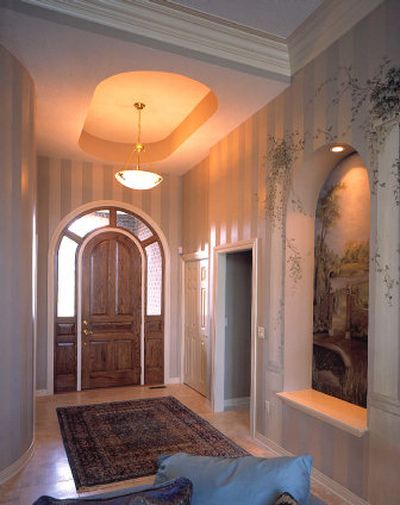
With wintry weather and low mortgage interest rates, this is a great time to upgrade the interior of your home.
And few improvements will make your home look as plush and attractive as upgrading doors, knobs, moldings and other types of decorative trim. Here’s our recipe for an inexpensive and luxurious look.
Changing doors doesn’t have to be complicated or expensive. And the best solution won’t be found at the big box stores, where your door purchase must include the frame. In this case, you’ll want to know the contractor’s secret to simplicity and cost-effectiveness.
Step one is to find a door company near your home that sells doors and trim moldings to the trades; this type of company does exist. You can buy something called a “match-up” door that will let you upgrade without changing the frame.
The door company creates a match-up door by using your old door as a “pattern” to shape the new door’s perimeter. Your hinge and hardware holes are exactly matched as well, so that old hinges can be reused.
This do-it-yourself project only requires you to be able to remove (and replace) hinge pins, and the door company does everything else. Normally, the cost is under $100 per door. If you don’t have a pickup or SUV, ask the millwork company to include pickup and delivery as well. When you do a whole house full of doors, you should expect pickup and delivery at no charge.
Four- and six-panel hollow-core doors can give your home an impressive look, compared to old, tattered, plain or flat surfaces. Also, sculptured door trim is easy to replace, and the hard part of this task can be performed by the door company.
Remove your old door moldings (casings) and send them along with the doors (it’s OK if they get damaged during removal). Simply select a new molding and the door company can miter the trim to the exact size needed. All you have to do is nail the pieces in place.
A trick for removing door trim (or any trim for that matter) is to use a razor knife or razor blade to cut the joint between the edges of the molding and what it’s connected to. For example, a door molding is connected to the door frame on one side and the wall on the other. Running a sharp blade the length of both connections will split the paint or caulking. Paint and caulk act like glue in most trim applications; a cut in the right place will simplify removal and help avoid damage to the surrounding areas.
Upgrading baseboard is another terrific way to improve your home’s appearance. Nothing looks worse than 16-year-old, vacuum-cleaner-smashed, mop-stained baseboard.
We suggest you look at pre-primed (or even pre-painted/pre-stained) material at your hardware store or home center. If you choose a painted finish, then look into the savings associated with high density particle board. For lasting quality and durability, this material is hard to beat.
Any kind of baseboard is easy to cut and install. And although particle board is OK for baseboard, we recommend real wood for door casings. Where baseboard doesn’t have to be very flexible or sturdy (flat trim against a flat wall), door trim actually helps to hold the door in place, and often must be slightly twisted to fit to the door frame and the wall.
Crown molding is another fun winter project, especially since there is lots of warmth near the ceiling. However, crown molding is not a project for the weak of heart. It takes patience and a well-supplied workshop.
There is one company that offers plastic crown moldings that attach to easy-to-install brackets. This product looks great in pictures, but it may be a little flimsy for many folks. Whatever you do, don’t purchase such a product off the Internet; it’s important with such products to eye the real thing first.