
Tuning up your tools

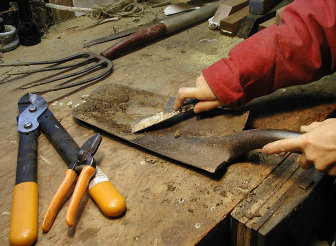
My garden tools worked hard last summer and deserve a little bit of TLC for their efforts. I, like many of you, just stuck them in the garage every which way at the end of the garden season – still covered with dirt. Now it’s time to give my tools their holiday treat: a good cleaning, sharpening and oiling so they will be ready for next year.
Tool time
Dirt and rust are a tool’s biggest enemies. The first task is to remove all the caked-on dirt from digging blades and handles using a stiff wire brush. Brush the tool to remove the dirt you can see and the stuff that might be in the cracks and crevices.
Bust the rust
Rust eats into the metal’s surface, making it rough, and that makes the tool harder to push into the dirt.
I use a piece of 80-grit sandpaper to rub the rust off. The sandpaper is flexible so you can work it into curves and cervices fairly easily.
Cutting edge
Once tools are cleaned up, it’s time to sharpen cutting edges. For pruning tools, first clean any sticky pitch off blades with a little paint thinner on a rag. Small blades on hand pruners and loppers can be dressed with a sharpening stone or a honing tool. The honing tool usually has a carbide steel surface that can sharpen an edge with a few strokes. Place the tool in a vise and then hold the sharpening tool at the same angle as the bevel of the cutting edge and draw the tool along it. After you’ve sharpened tools, put a drop of oil on any gear mechanisms to protect them and make them easier to use in the spring.
Tools such as hoes, shovels and digging forks are best sharpened with a mill bastard file. Get one with a handle on it so it’s easier to use. The tool needs to be held in a vise or firmly braced on a work bench to allow good cutting force with both hands on the file. Remove burs first and then draw the file across the edge following the bevel. For shovels that don’t have an obvious bevel, cut across the edge with a low angle to create a new edge.
Oil them up
Last, rub wooden tool handles lightly with a bit of 120-grit sandpaper to remove any fine splinters. Apply a coat of linseed oil or a very light coat of motor oil rubbed into the wood. The oil helps protect the handle from moisture and keeps dirt from sticking to it. Coat all metal surfaces with a light layer of oil to deter rust formation over the winter.
Ready to use
Hang long tools neatly in racks mounted on the garage or shed wall to keep them from getting in the way of other activities. Small tools can be stored in a five-gallon plastic bucket fitted with a fabric tool caddy, where they will be easy to find in the spring.