
The right contacts

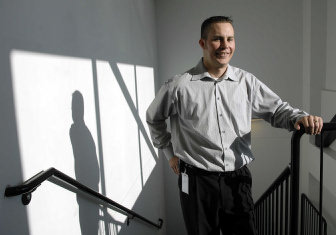
Like several thousand other business professionals across the country, Patchen Noelke uses LinkedIn, a popular social network site for business people. Noelke, the director of marketing for Spraycool, a Liberty Lake company designing high-performance cooling technology, says the site gives him business contacts he’d never meet otherwise.
LinkedIn and other sites, including the less-popular Ryze, want to grab the buzz and enthusiasm that better-known sites like Friendster and MySpace have generated among the under-30 mob. But the jury’s out on whether business network sites can garner a critical mass of dedicated users.
Several million people across the globe, mostly in the United States, have reportedly signed up as LinkedIn members. But the truth is that many, like Spokane entrepreneur Fred Brown, don’t use it, despite showing up in a name search at LinkedIn.
Brown and thousands of people accepted invitations from friends and colleagues to join LinkedIn, but then did nothing with that membership.
People who are successful in business, said Brown, already have well-established networks. Any Web site claiming it can expand and broaden that network has to demonstrate something out of the ordinary to get his attention, Brown said.
“Plus, I’m pretty busy,” said Brown, who is CEO of Spokane software company Next IT. “I don’t have the time to keep abreast of the contacts there (at LinkedIn),” he said.
Brandon Tanner, who’s 32 and a Spraycool colleague of Noelke, said he’s learning to make use of LinkedIn as a tool to broaden his electronic Rolodex.
The business development director for Spraycool (formerly ISR), Tanner said he signed up for a MySpace account but never used it. “I could see using it more, maybe, if I was younger,” Tanner said.
The LinkedIn system works this way: Someone who knows Tanner will e-mail him with an invitation that reads: “Join my LinkedIn network.” Tanner in this case visits the LinkedIn site, creates a personal login and includes information on where he works, including the company name and the job he holds.
So Tanner now is a formal part of the sender’s network, and each person on that sender’s network is notified that Tanner has joined LinkedIn.
All of those network members can then visit Tanner’s LinkedIn account summary and see who else Tanner has invited to become part of his network. It’s a case of two or three degrees of separation, Internet-style.
For Tanner, the key value is helping him scope out contacts in businesses and sectors where Spraycool intends to markets its products.
“I can find someone in a particular network and ask to be included in their network. I get to leverage that person’s contacts and know a little about those people and their type of business,” he said.
Tanner started software firm A Perfect Web in Spokane after graduating from Whitworth College. A Perfect Web was later acquired by Brown’s company, Next IT.
One unexpected benefit: former classmates who’ve moved from Spokane have spotted Tanner on LinkedIn, allowing him to stay in touch.
Another user of LinkedIn, recruiter Melissa Geary at Sandpoint-based Coldwater Creek, has used the network to land new hires for the online and retail apparel company. Her connections on LinkedIn helped Coldwater Creek hire two new employees: one in information technology, the second a graphic artist.
Steve Trabun, business development manager for Spokane’s Avista Corp., is another professional whose name is on LinkedIn but who rarely uses it.
“I keep all my contact information sitting on my belt in my Blackberry,” Trabun said. The Blackberry keeps him connected to his e-mail and his calendar, and Trabun said his contact list either includes the people he needs, or the people who can help him find the person he needs. “Call me old-fashioned,” he said. “I’d rather maintain my contact information through traditional means.”